


Most Change Management strategies fail for one simple reason: They treat employees like cargo, not crew.
When you treat people like cargo, you simply move them from Point A to Point B. You don’t tell them the route, you don’t give them a task, and you expect them to sit still while the ship rocks violently.
Then, when they get seasick — anxious, resistant, or burnt out — leadership wonders why “morale is low.”
In my work with high-growth organizations, I see leaders try to fix this with Toxic Positivity. They become cheerleaders. They plaster on a smile, order pizza, and talk about “exciting opportunities” while the engine room is arguably on fire.
Here is the Strategic Realism: In choppy waters, your team doesn’t need a cheerleader. They need a Captain.
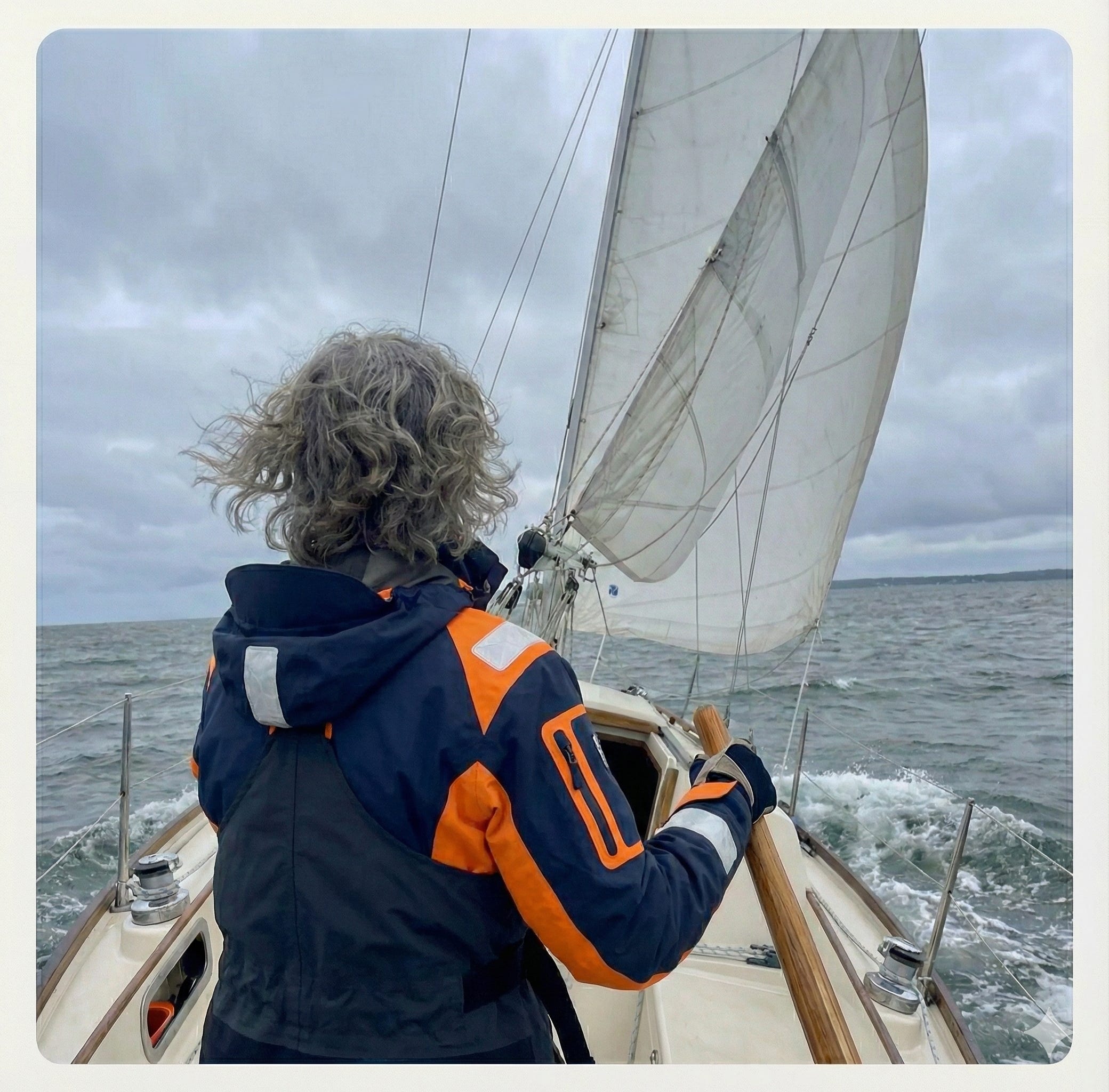
Cheerleaders deny the storm. Captains respect it.
If you want to lead through complexity without capsizing your culture, you have to stop trying to manage feelings and start anchoring your people.
The Difference Between Cheerleading and Anchoring
Cheerleading says: “This isn’t that bad! Look on the bright side! We’re all in this together!”
The Result: This destroys trust because it denies the reality your team is living.
Anchoring says: “The waves are high, and this is going to be a rough transition. But the hull is solid, I have the map, and here is exactly how we are going to navigate it.”
The Result: This builds trust because it acknowledges the struggle while providing the safety of a plan.
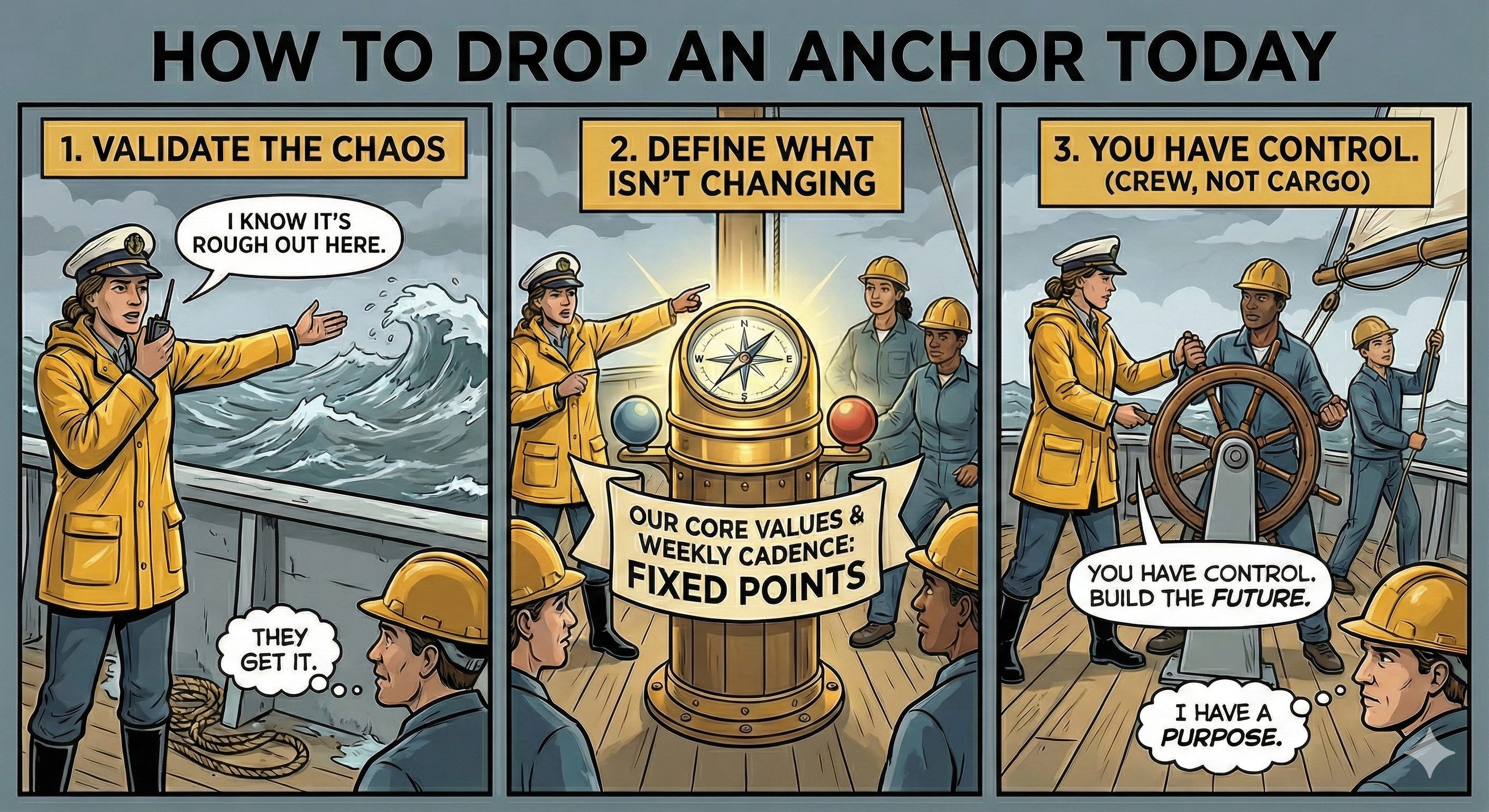
How to Drop an Anchor Today
If your team is feeling the drift, here is how you steady the ship this Monday:
Validate the Chaos: Don’t pretend business is usual. Acknowledge the friction. Saying, “I know this new process is slowing us down right now,” buys you more loyalty than pretending it’s “seamless.”
Define What ISN’T Changing: Anxiety comes from the unknown. In every transition, things are moving, but something must remain a fixed point. Explicitly tell your team what is not changing (our core values, our weekly cadence, our commitment to quality). That is their anchor.
Assign Stations (Crew, not Cargo): Give people agency. Don’t just tell them what is happening to them; tell them what they are responsible for during the transition. When people have a hand on the wheel, they feel less seasick.

Real leadership isn’t about pretending the water is calm. It’s about being the one person on deck who isn’t panicking.
Be the Captain, not the Cheerleader.