
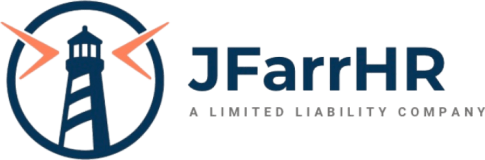

We are crawling toward the finish line of the week.
If you are like many of the leaders I’ve spoken with, you feel like you’ve been running on a treadmill set to maximum incline while simultaneously doom-scrolling the news. It’s only Thursday, but it feels like we’ve lived a month since Monday morning and it feels like Super Bowl LX was last year.
When we look “up” right now — at the federal level, at global conflicts, at the shifting macroeconomic landscape — it is easy to feel small. When big systems strain, stall, or fail, it creates a profound sense of helplessness in our daily work. We see supply chains jittering, regulations shifting overnight, and the social fabric stretching thin.
Subconsciously, many of us are still waiting. We are waiting for the “adults in the room” to take charge. We are waiting for a stabilizing policy shift from D.C., a market correction from Wall Street, or some external force to ride in and fix the infrastructure so we can go back to “business as usual.”
I have a hard reality check for us as we head into the weekend: The cavalry isn’t coming.
No one is coming to solve the specific problems facing your block, your staffing issues, or your local supply chain. The “Big Fix” is an illusion that keeps us paralyzed.
But this isn’t a call to despair. It’s a call to adjust our vision. We need to stop looking “up” for salvation and start looking “down” — right at our feet, right here in our immediate community.
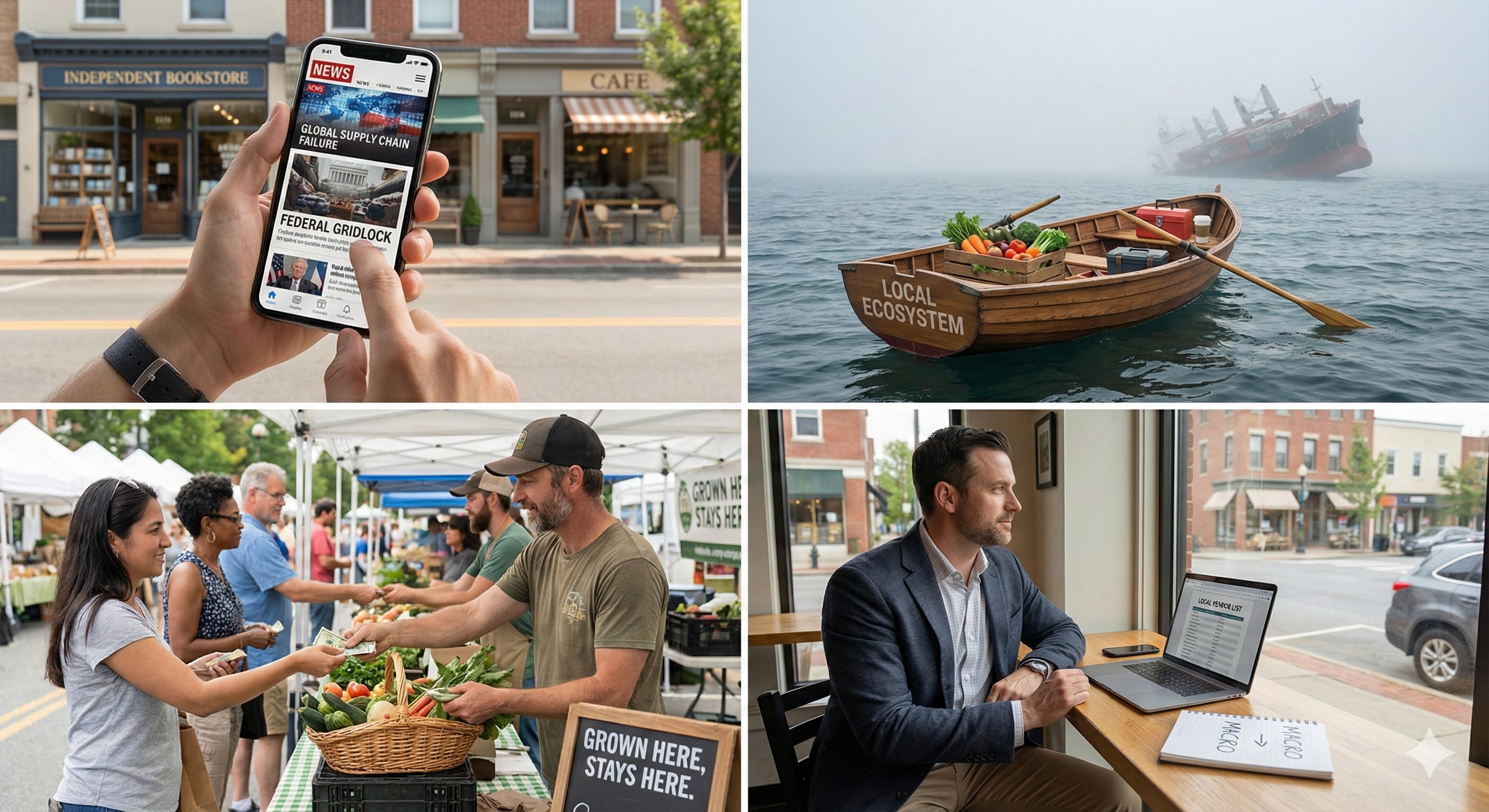
The Life Raft Theory
When a massive ocean liner starts taking on water, you don’t waste time arguing with the captain on the bridge about navigation errors. You inflate the life rafts.
In our current climate, our local ecosystem is the life raft.
As we learned during COVID, big systems are efficient, but they are fragile. When they break, they break everywhere at once. Local systems are messy, but they are antifragile. When national safety nets fray, local commerce and human connection are the mesh that catches us.
The small business owner who hires local teenagers? That is your future talent pipeline.
The nonprofit feeding our immediate neighbors? That is your community’s social safety net.
The independent coffee shop that serves as a community living room? That is essential infrastructure for mental health.
These aren’t just “nice to haves” or charming amenities anymore. They are the only things that actually work when the big systems freeze up.
Re-framing “Shop Local” as Economic Self-Defense
For years, “Shop Local” has been marketed as a form of charity or a cute aesthetic choice. We need to delete that framing immediately.
Supporting a local business, hiring a local vendor, or donating to a nearby nonprofit right now is not charity. It is an act of collective self-preservation. It is economic self-defense.
Why?
Velocity of Money: When you spend a dollar at a national chain, most of that value leaves your zip code immediately. When you spend it locally, it circulates here: paying wages, funding local taxes, and keeping your neighbors employed. A strong local economy buffers us against national recessions.
Supply Chain Resilience: If your business relies entirely on a single global vendor, you are vulnerable. Building relationships with local suppliers gives you a backup plan when the global chain snaps.
Control: A thriving local economy is perhaps the only thing we actually have some measure of control over right now. You cannot fix inflation, but you can keep a local bakery or cafe open.
The Leader’s Pivot: From Macro to Micro
As leaders, our attention is our most valuable currency. Where you look, your team looks.
If you spend your week obsessing over national headlines, your team will absorb that anxiety. They will feel helpless because you feel helpless.
The pivot we need to make this weekend is from the Macro to the Micro.
Macro: “The economy is scary.” (Paralyzing)
Micro: “Our local network is strong, and we are deepening our ties with local partners.” (Actionable)
When you invest in your local ecosystem, you aren’t just “doing good.” You are building a fortress of stability for your organization. You are signaling to your team that while we cannot control the wind, we can absolutely reinforce the hull of our own boat.
Your Weekend Assignment
We have to build our own stability. We have to reinforce our own ecosystem.
So, this weekend, I challenge you to disconnect from the chaos “out there” and invest in the reality “right here.”
Turn off the national news. Go to the farmers market. Tip your local barista or server excessively well. Check in on a neighbor. If you are a business owner, look at your vendor list; can you switch a contract to a local provider?
Spend your time, energy, and resources within a five-mile radius.
And finally, take a breath.
Building life rafts is hard work. Leaders need rest, too. The fight for our community stability continues on Monday, and we need you rested enough to wage it.