


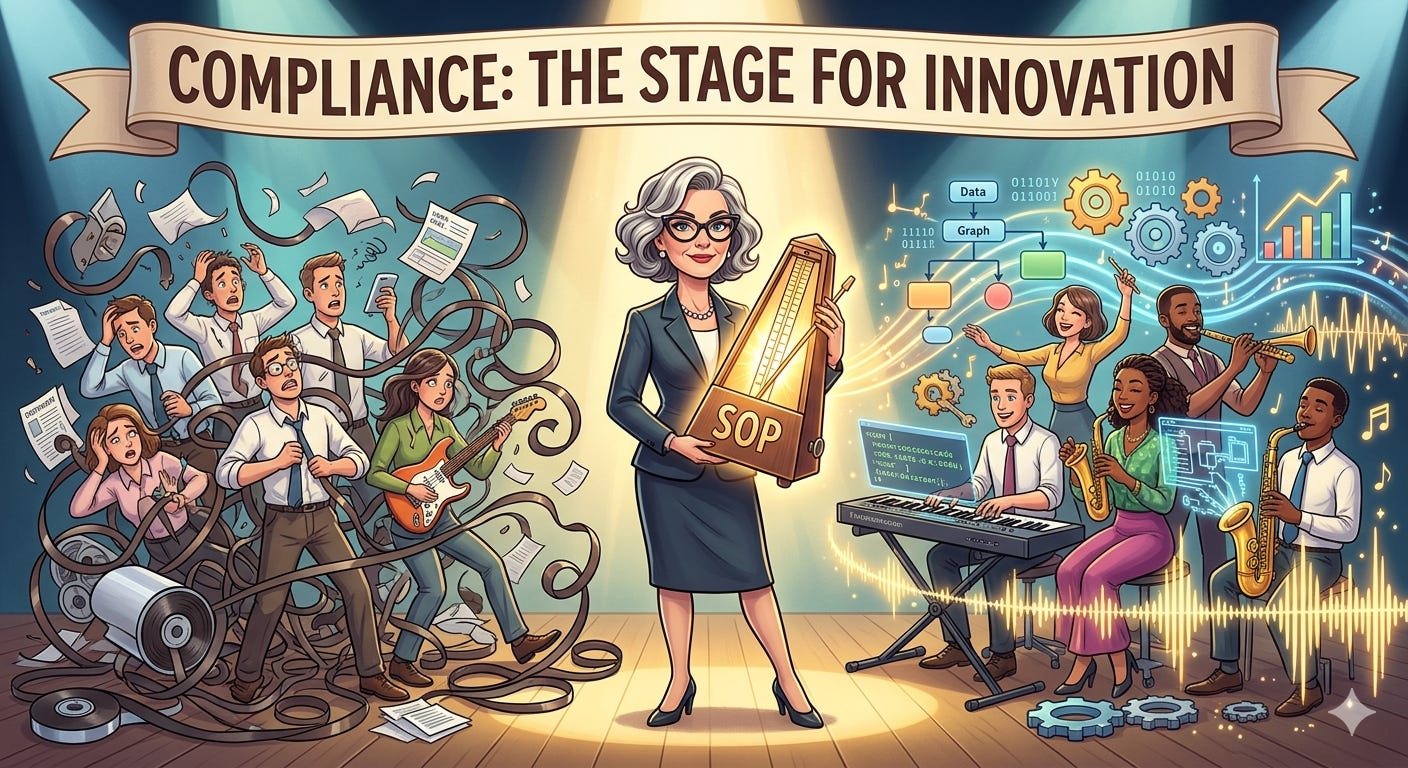
If you’ve ever spent time in a recording studio, you know about the “click track.” It’s a relentless, unsexy, electronic metronome that plays in the band’s headphones while they record.
Ask almost any musician, and they will tell you they hate it. It feels rigid. It feels like it kills the “vibe” and restricts their natural, creative flow.
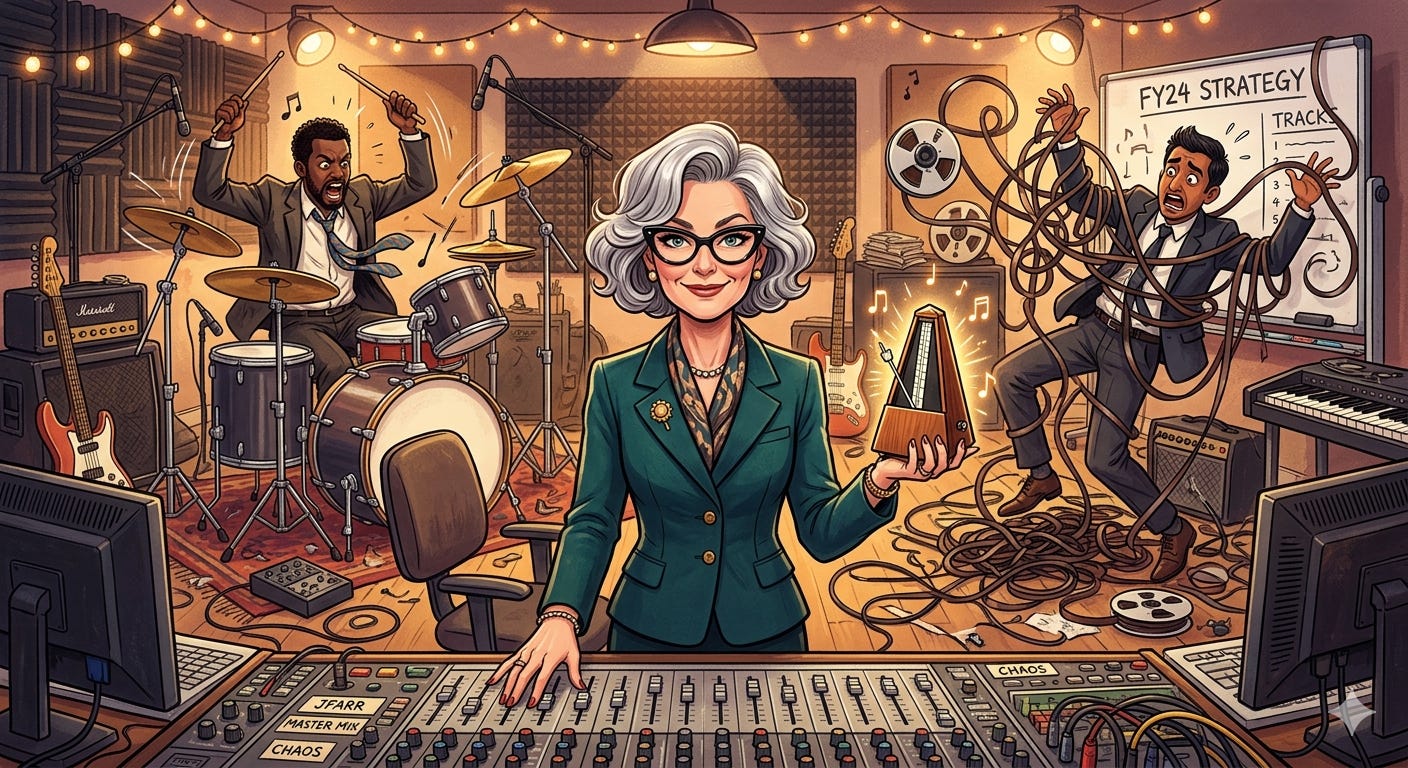
But ask the audio engineer what happens when a band refuses to play to a click track. The drummer speeds up on the chorus. The bass player lags on the bridge. By the time you get to post-production, the isolated tracks don’t line up, the mix is a chaotic mess, and you have to spend thousands of dollars (and endless hours) trying to digitally fix it in the edit.
In my two decades of HR leadership, I see brilliant, visionary founders make this exact mistake. They often view compliance, labor laws, and Standard Operating Procedures (SOPs) as the corporate click track: a rigid, bureaucratic buzzkill that slows down their “creative flow.” And I admit, as a junior leader, I was annoyed by all the hard stop rules and more specifically, the time I had to spend cajoling and begging other leaders to follow them.
But here’s what I learned: Someone refusing to play to the click track isn’t being agile or innovative. They are just creating a very expensive mess in post-production.
The Myth of “Process Kills Creativity”
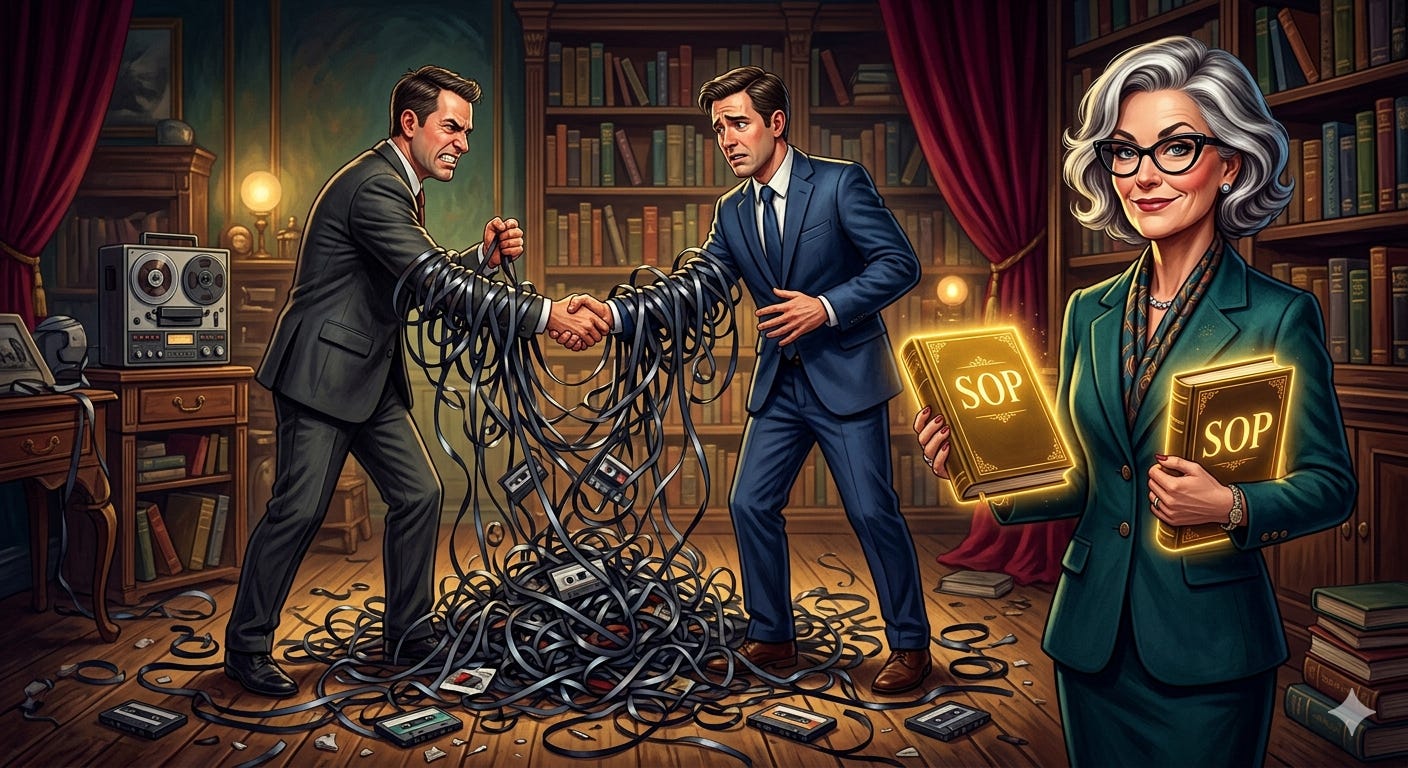
Visionary leaders love to move fast and break things. (I can relate! Who doesn’t love a #Disrupt movement?!) But when a Strategic Realist like me steps into the room to talk about FLSA compliance, proper employee handbook language, or the legal realities of worker misclassification, the immediate reaction from the C-suite is often: “You are slowing us down with red tape.”
So many leaders want to run the business on “vibes” and handshake agreements because it feels organic. But “organic” is just another word for undocumented. When you run a business without clear SOPs or compliance frameworks, you are forcing every single employee to constantly guess what the tempo is supposed to be.
The Cost of Drifting Out of Time
Without a click track, a band inevitably drifts out of time. Without strict compliance and operational playbooks, a company drifts into massive liability.
You might feel like you are moving fast right now, but what happens when the music stops? If you’ve been fast and loose with classifying your front line talent as Exempt employees instead of hourly, nonexempt employees just to save on overtime, payroll taxes, and administration, the Department of Labor won’t care about your “creative flow.” They will audit the track, find the misclassification, and hand you a staggering bill for back wages, liquidated damages, and unpaid overtime.
That is the corporate equivalent of trying to fix a disjointed and chaotic song in post-production. It is incredibly painful, highly expensive, and completely avoidable.

The Freedom of the Metronome
Here is the secret that professional studio musicians know: you don’t fight the click track. You settle into the pocket and let the click carry the mental load of keeping time.
When your organization’s compliance is bulletproof and your SOPs are clearly documented, your team actually has more freedom to improvise. The boundaries are clearly set. Your managers don’t have to waste mental energy wondering how to handle a compliance issue, and your executives don’t have to panic about labor audits or surprise demand letters. The rhythm is locked in.
Compliance is not the fun-killer; it is the stage that allows your heavy lifters to play fast, loud, and creatively without bringing the entire roof down on top of them.
But don’t panic: you don’t need to document every single process tomorrow. Start by laying down the click track for your highest-liability areas: payroll processing, hiring & termination protocols, and safety standards. Get the bass and drums locked in first.
The Track of the Week:
🎵 “Once in a Lifetime” by Talking Heads 🎵
This song is legendary for its relentless, hypnotic, metronomic groove. The rhythm section is completely locked in and practically robotic in its precision. But because that foundational “click” is so incredibly stable, it allows David Byrne to deliver one of the most erratic, wild, and creative vocal performances in rock history. The strict boundaries of the rhythm are exactly what created the space for the innovation.
Over to you
Look at your current operations. Are you playing to a click track, or are you hoping you can just fix the liability in post-production? Let me know in the comments which SOP your team desperately needs to document this week or share a story about a time when you rolled the dice without an SOP and learned the hard way to play to a click track.
