


The most dangerous phrase in recruiting today is “culture fit.”
When a hiring manager tells me they passed on a candidate because they “just weren’t a good fit,” what they usually mean is, “I wouldn’t want to grab a beer with them.” It’s a completely understandable instinct. We all want to work with people we genuinely like. But when leaders use vibe checks as a hiring metric, it becomes classic Country-Clubbing. Instead of evaluating what a candidate adds to the business, the manager is looking for someone who has the ability to blend in and not disrupt the status quo. While they convince themselves they are protecting the team’s chemistry, they are actually building a comfortable echo chamber instead of a genuinely strong team.
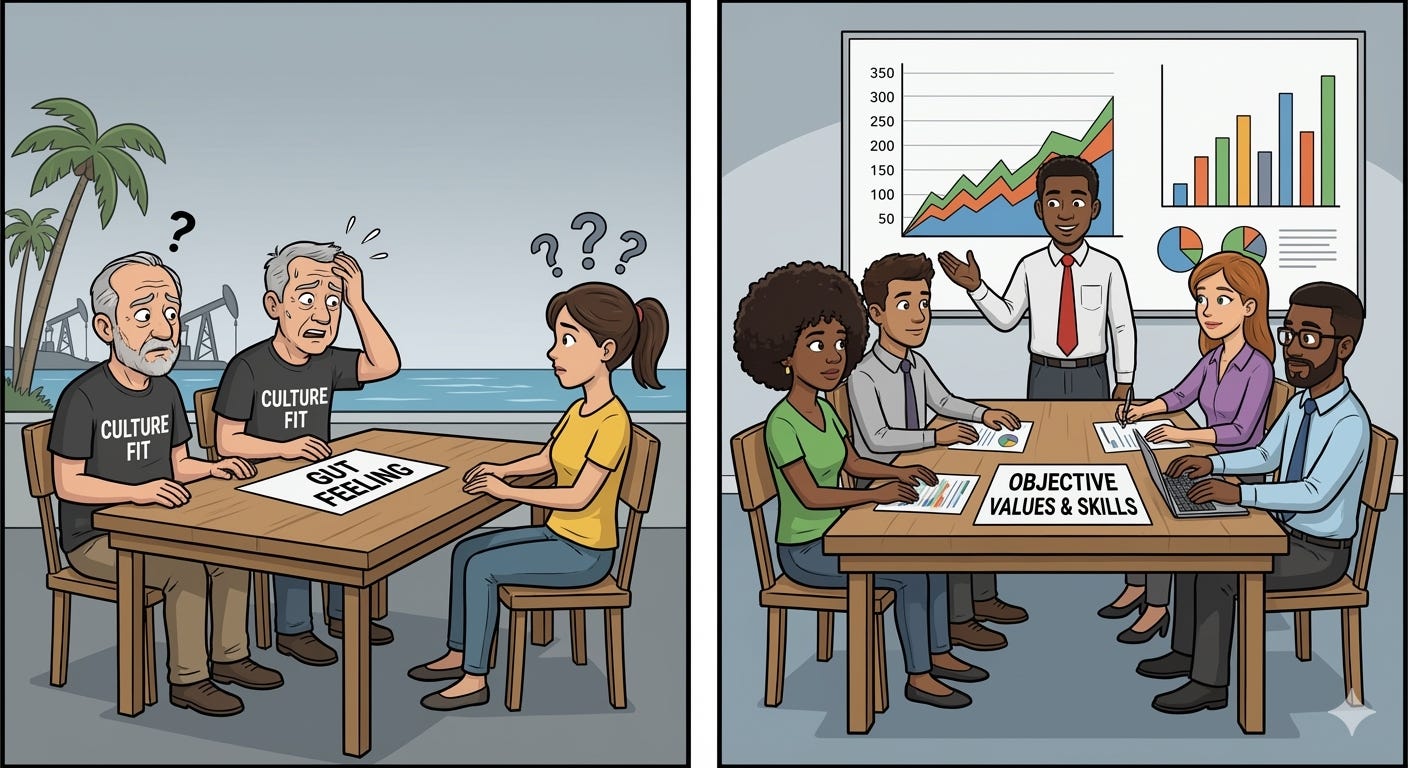
If you are a corporate executive, a small business owner, or a nonprofit director, relying on “vibes” to build your team isn’t just bad management. It has become a corporate dog whistle for discrimination. While the law doesn’t require you to have a flawless reason for passing on a candidate, “not a good fit” provides incredibly convenient cover for rejecting someone because their race, gender, sex, age, neurodiversity, or disability makes a hiring manager slightly uncomfortable. I know the word “diversity” has taken a beating in the press lately, reduced to political debates and corporate checkboxes. But if we strip away the baggage, diversity is simply the strategic advantage of mixing different lived experiences. By leveraging different cultures, experiences, and abilities rather than filtering them out, you build something far bigger and more resilient than a homogenous team ever could.
That is the strategic case for abandoning the Country Club. But even if you ignore the business value, the harsh truth is that the courts are catching on to the dog whistle. Here is your Strategic Realism guide to the 2026 legal landscape of hiring, and why defending a “vibe check” is officially a losing battle.
The 2026 Reality Check: The Vibe Check Cuts Both Ways
Here is the trap many modern leaders fall into: they believe that because they are actively trying to build a diverse workforce, they are immune to discrimination claims. But Country-Clubbing is illegal in every direction. If you use a subjective “vibe check” to curate a specific workplace culture, you have missed the biggest legal shift of the decade.
In June 2025, the Supreme Court issued a unanimous decision in Ames v. Ohio Department of Youth Services. The Court officially killed the concept of “reverse discrimination” and eliminated the old “background circumstances” rule. The ruling made it crystal clear: Title VII protects all individuals equally. A Caucasian, male, or heterosexual plaintiff no longer carries a higher burden of proof when claiming discrimination.
Today’s EEOC is aggressively hunting down subjective hiring practices. If a highly qualified Caucasian or heterosexual candidate is rejected for a vague lack of “fit” in a predominantly BIPOC or LGBTQ+ office, plaintiff’s attorneys will use the Ames precedent to tear the company apart. The “vibe check” is officially a liability for everyone.
The Nonprofit Dilemma: Competency vs. Identity
This shift from “vibe” to “skill” creates a massive point of friction for community-based organizations. Let’s say your nonprofit serves marginalized women and is staffed primarily by women from that community. You desperately need to ensure anyone you hire understands the systemic barriers your clients face.
The JFarr Fix is to rigorously separate Cultural Identity (who the person is) from Cultural Competency (what the person can do).
You cannot legally require a candidate to match the demographic of your community. You can legally require a candidate to possess a deep, demonstrable understanding of trauma-informed care and the specific socioeconomic barriers facing your clients. You test for this via rigorous, behavior-based interviewing.
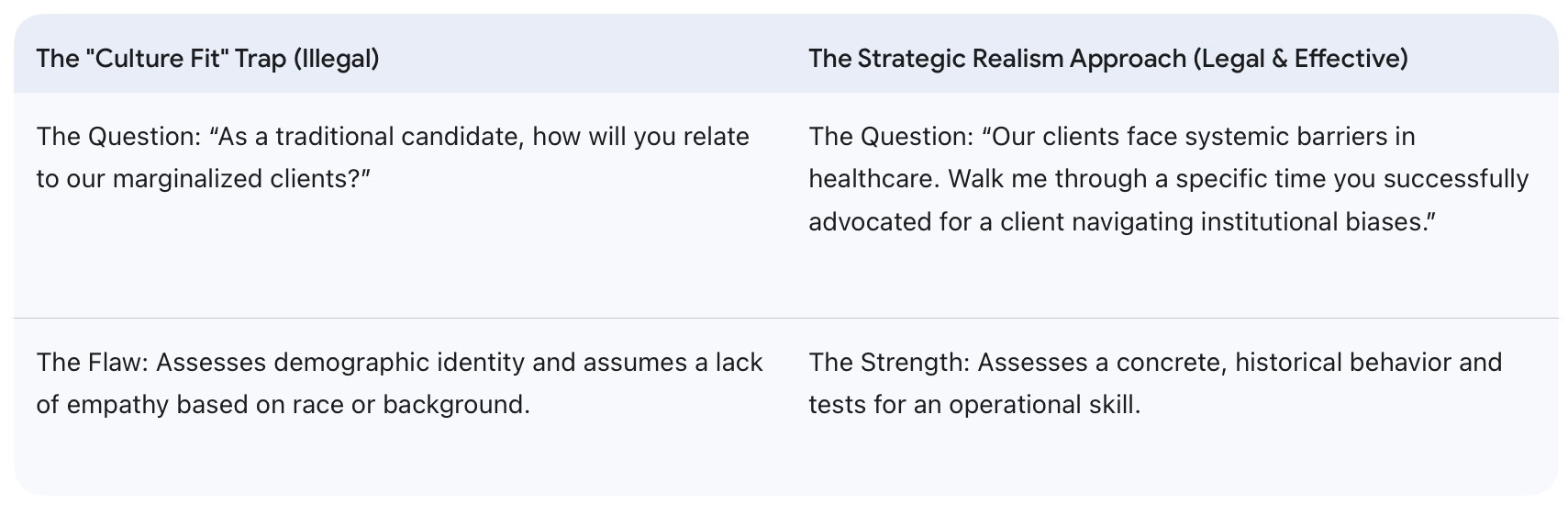
If the candidate gives a colorblind, “pull-yourself-up-by-your-bootstraps” answer, they fail the competency test. You reject them for a lack of required skills, not a lack of “culture fit.” Great job! We’re done, right?
