


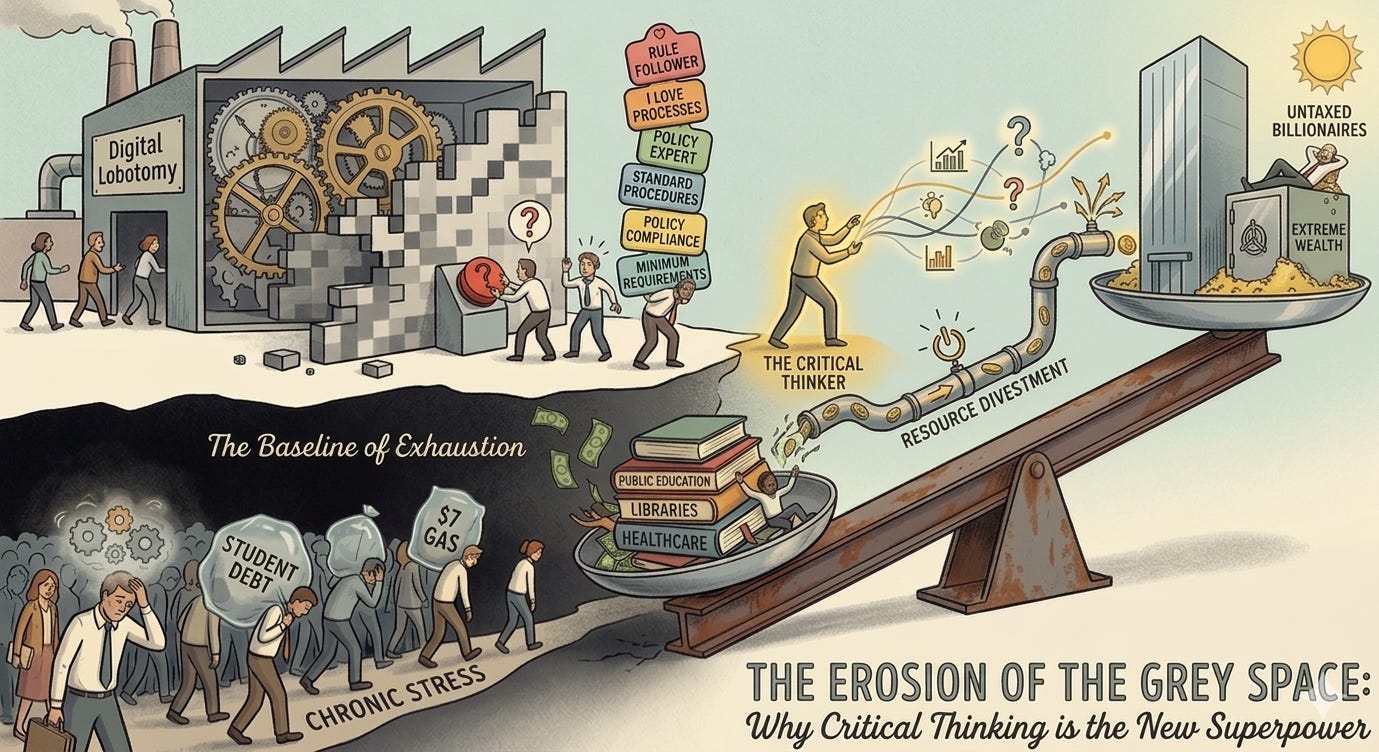
There is a very specific, surreal feeling that comes with operating in the modern professional world right now. If you pause and look around, you might realize we are currently living in the exact intersection of Idiocracy & Office Space, stuck in the Chotchkie’s restaurant where the waitress is badgered about her “pieces of flair.”
It’s baffling, and frankly, a little terrifying. People seem to be losing their grip on basic problem-solving. The ability to navigate the “grey space” — that critical area where there is no manual, no button to push, and you have to actually think your way through a complex issue — is disappearing. Accountability is a relic; today, everything is always someone else’s fault.
When you step back to look at the macro environment, the decline in critical thinking isn’t just a localized annoyance. It’s a perfect storm of systemic failures, compounding over decades, that are walking right through our office doors every morning.
The Digital Lobotomy: We Don’t See the Gears Anymore
We live in a 21st-century world of tech shortcuts. Everything lives inside a microscopic computer chip. We no longer interact with analog machines where you can physically see cause and effect — where if a gear jams, you can look at it, figure out why, and fix it. Today, when the digital button doesn’t work, people simply freeze. Our reliance on technology that abstracts the background process has eroded our ability to investigate the “why” and “how” of the systems we use every day.
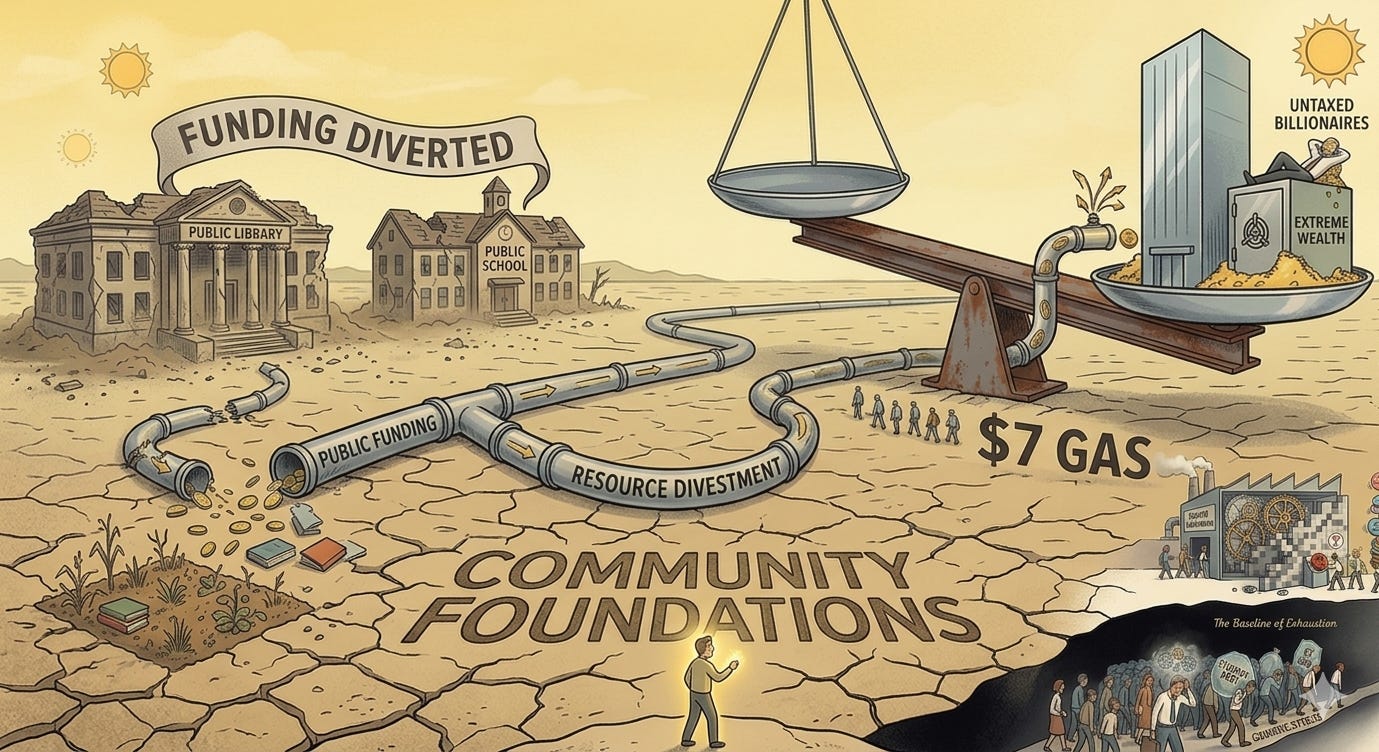
The Baseline of Exhaustion: A Half-Century in the Making
We can’t talk about the modern workforce without talking about the socio-economic reality we’ve been living in. This didn’t happen overnight. It’s a slow burn that started decades ago as the foundations of basic economic stability began to crack.
We are navigating an incredibly strained economic landscape. The average worker is left shouldering the burden, trying to survive massive inflation, high housing costs, and expensive daily commutes. The result? Basic financial stability has become a luxury. We have a generation of workers who had to borrow exorbitant funds just to get a seat at the corporate table. They enter the workforce already drowning in debt, operating from a place of financial scarcity and pure survival mode rather than intellectual curiosity.
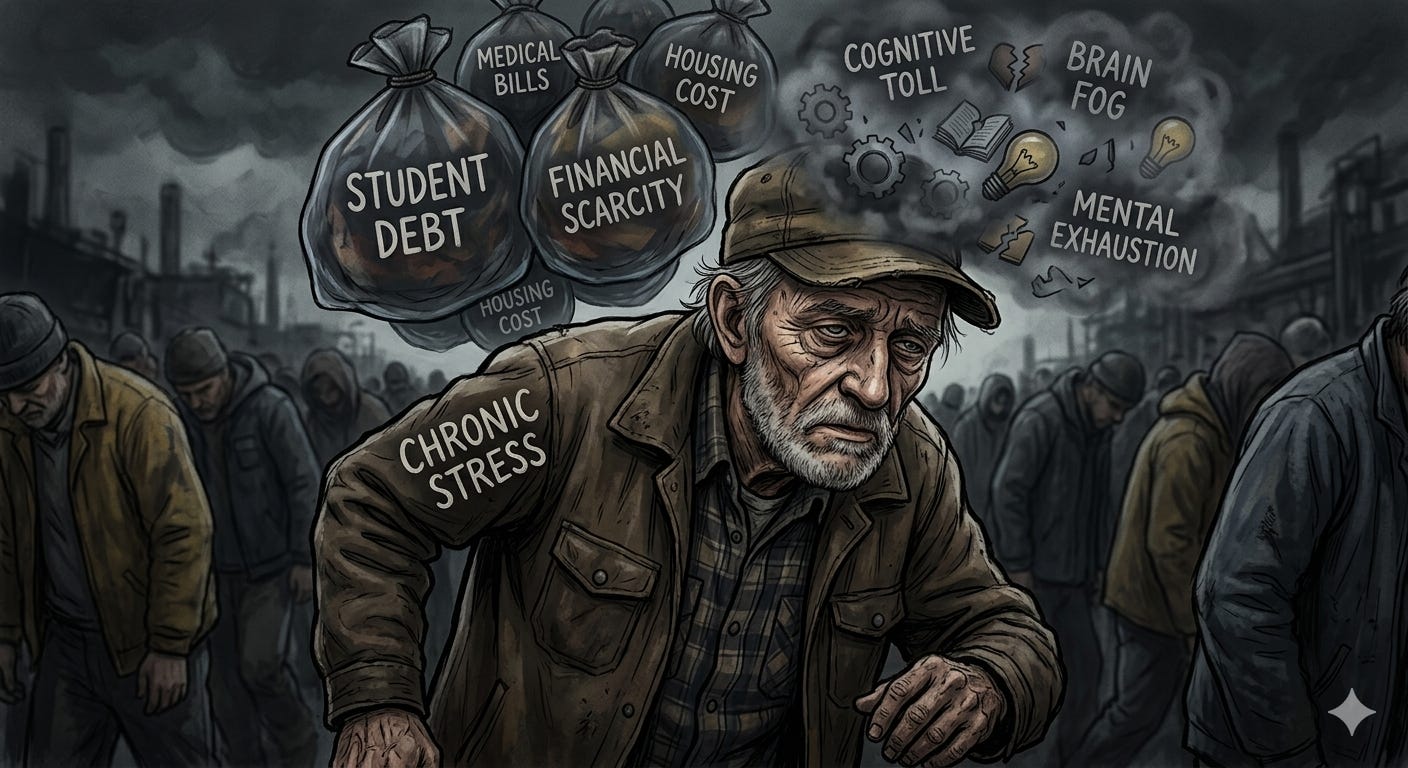
The Cognitive Toll of the 2020s
Layer onto this the reality of the last few years. The compounded stress of a global pandemic, rapid shifts in work environments, and a strained healthcare system have taken a massive toll on our collective resilience. We are dealing with widespread burnout and a workforce whose cognitive bandwidth is simply tapped. When people are physiologically and psychologically exhausted, executive functioning is the first thing to go. They literally do not have the capacity to learn new things, think critically, or navigate ambiguity.
The Leadership Vacuum
When you combine all of this, you get the modern workplace. You get teams unable to navigate the grey space, leaning heavily on blind compliance, and a profound vacuum of leadership. When the inevitable crisis hits, there is no one left in the room who knows how to manage the power dynamics, mitigate the risk, and evolve the strategy.
We have to acknowledge this reality if we are ever going to fix it. We can’t keep applying standard performance management tools to a workforce that is fundamentally depleted, exhausted, and deskilled.
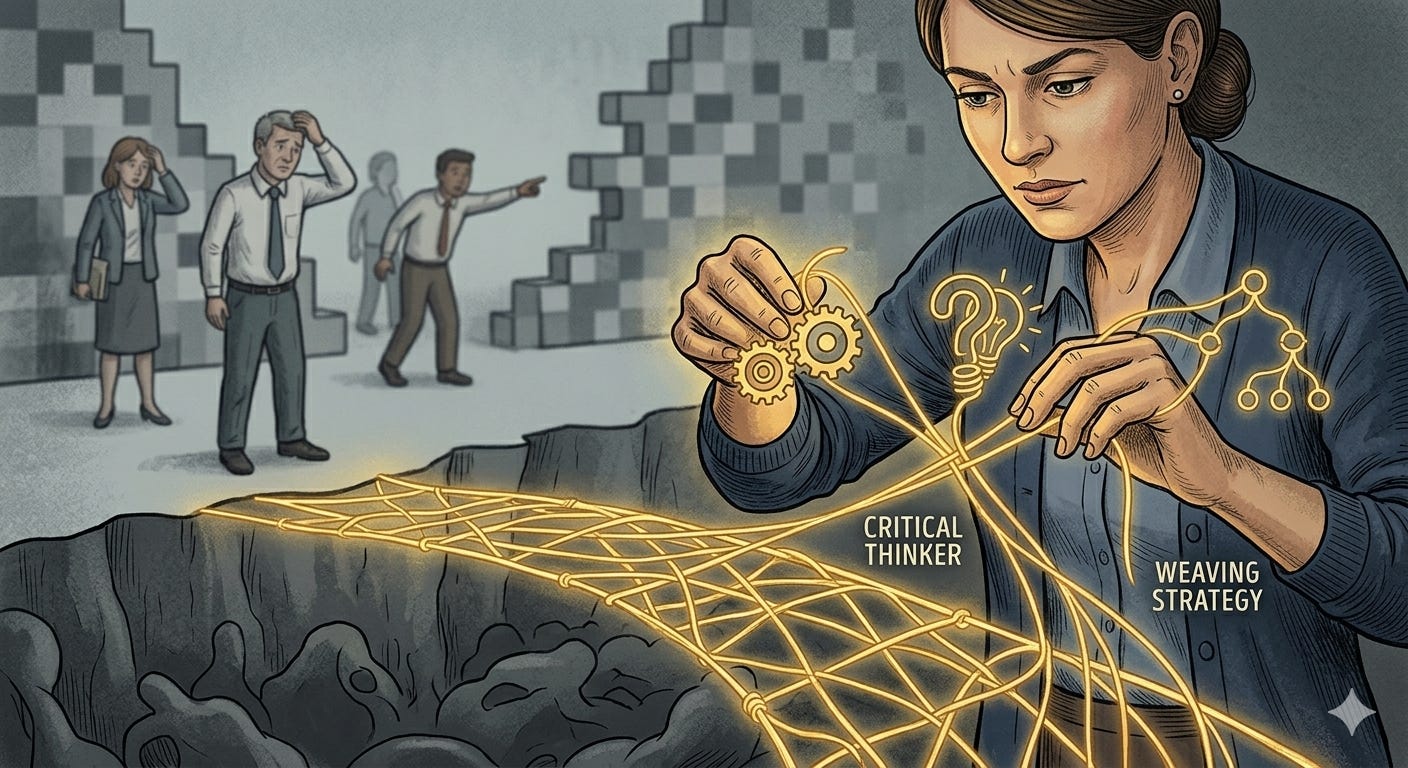
This is exactly why I lean so heavily on Strategic Realism. If you are tired of applying HR band-aids to structural wounds, we need to talk. Send me a message if your agency needs a reality check on its operational risk. And check back next week for Part 2, where I’ll dissect the anatomy of a complete organizational breakdown — and illustrate how a lack of critical thinking and formalized processes can paralyze a company.
