


There is a distinct feeling you get when the opening chords of a punk rock song hit. Whether it’s heard at a sweaty, underground club or as a vintage vinyl record spinning in your living room, the energy is undeniable. It’s loud, it’s a little messy, and it’s entirely unapologetic.
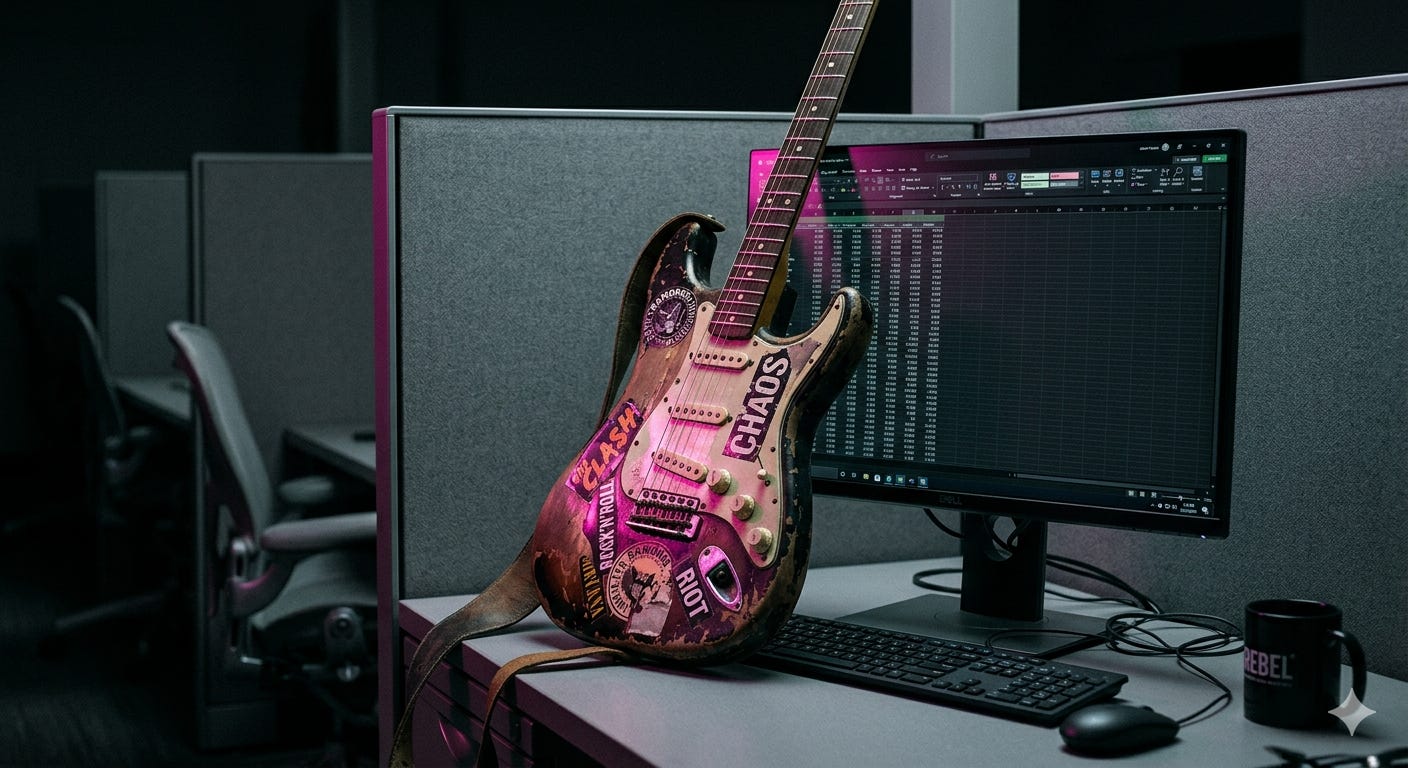
Punk rock wasn’t born out of a desire to play perfectly; it was a reaction against the over-produced, sterile stadium rock of the 1970s. It was about urgency. It was about grabbing an instrument, stripping away the excess, and delivering “three chords and the truth.”
In my two decades navigating boardrooms and shaping people strategy, I’ve realized something crucial: Corporate America is suffering from a bad case of stadium rock.
We’ve over-produced our workplaces. We have 80-page employee handbooks written in heavy legalese, convoluted approval matrices, and rigid annual performance reviews. It’s a lot of expensive equipment, but the music is putting everyone to sleep.
It’s time to bring a little punk rock into Human Resources. Here is why the best workplaces are learning to embrace disruption, break the rules, and find the beauty in dissonance.
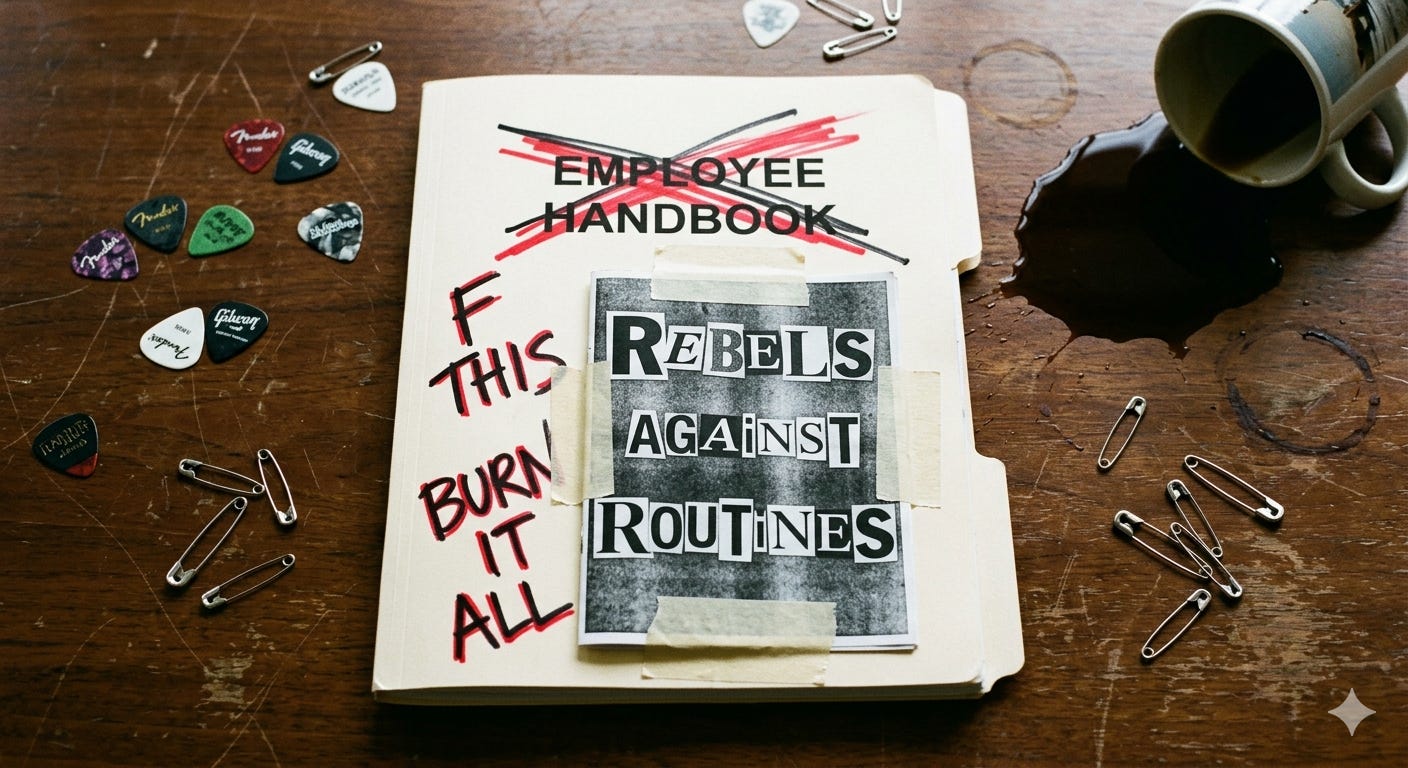
The DIY Ethos vs. Corporate Bureaucracy
At the heart of the punk movement is the DIY (Do It Yourself) culture. You didn’t need a massive record label to put out a zine or press a 7-inch single; you just did it.
Traditional HR often acts as the ultimate gatekeeper, forcing every decision, conflict, and cultural initiative through a centralized bottleneck. A punk rock approach to people strategy means empowering micro-leadership. It means giving your managers and frontline employees the autonomy — and the trust — to solve their own problems. So instead of forcing every employee conflict through a formal HR mediation, train your frontline managers in basic conflict resolution. Let them handle the indie gigs so HR can focus on the stadium tours. When you strip away the bureaucratic red tape, you stop policing your people and start amplifying them.
The Beauty of Dissonance
If you listen to a great punk track, you’ll hear feedback, power chords, and a whole lot of dissonance. It’s not a flawless symphony, but that friction is exactly what gives the song its drive.
In the corporate world, we are obsessed with “culture fit” and forced harmony. But a team that never argues is a team that is stagnant. True innovation requires psychological safety — the kind of environment where employees aren’t afraid to play a “wrong” note or voice a dissenting opinion. Dissonance isn’t a sign of failure; it’s the sound of progress happening in real-time.
The Forced Encore (Why RTO Mandates are Bad Acoustics)
If we want to look at the ultimate “stadium rock” rule of the modern workplace, look no further than the blanket Return-to-Office (RTO) mandate.
Let’s be honest about the dissonance here: these mandates often aren’t about collaboration or productivity. They are often driven by out-of-touch, lonely executives who rely on the office to get their social needs met. Surrounded by “yes people” in the C-suite, they miss walking the floor and having casual “coffee talks” to feel connected to the action.
Meanwhile, the “heavy lifters” — the people actually writing the songs and producing the tracks — just want to be left alone. They want to put their headphones on, focus, and perform. Forcing them back into a cubicle so leadership has a captive audience is like forcing a band to play a three-hour acoustic set just because the lead singer wants someone to talk to between songs. Let the heavy lifters stay in their home studios if that’s where they make the best noise.
Yes, bring the band together for the big jam sessions & practices — strategy kickoffs, creative sprints, or celebrating a win. But don’t force them into the studio just to tune their instruments.
Tearing Up the Setlist
The best live shows are agile. If the crowd is vibrating with energy, the band speeds up the tempo. If an amp blows out, the drummer keeps the beat going while they fix it. The setlist is a guideline, not a contract.
Yet, so many organizations cling to rigid 5-year plans regardless of what the market — or their employees — are actually doing. We need to replace the slow, theatrical “annual review” with real-time, continuous feedback. We have to be willing to tear up the setlist and pivot when the vibe of the room shifts.

Finding Your Rhythm in the Chaos
Embracing disruption doesn’t mean throwing out all compliance and letting anarchy reign. As an HR strategist, my job is still to keep the business sound and legally protected. But compliance is the stage; it’s not the show. The show is the people.
If we want to build workplaces that actually attract and retain passionate, creative talent, we have to stop trying to conduct a flawless, quiet symphony. We need to turn up the volume, let people be their authentic selves, and get comfortable in the mosh pit.
The Track of the Week:
🎵 “Los Angeles” by X 🎵
Why you should listen: A staple of the late-70s SoCal punk scene, this track is a masterclass in controlled chaos. John Doe and Exene Cervenka’s vocals are intentionally dissonant. They don’t harmonize perfectly, but their contrasting tones create a ferocious, unforgettable energy. It’s the ultimate reminder that you don’t need to sound exactly like everyone else to create a masterpiece.
Over to You
I’ve shared my thoughts on the RTO mandate. What is another “corporate rule” in your workplace that sounds like a bad, over-produced pop song? Let me know in the comments how you would remix it.
