


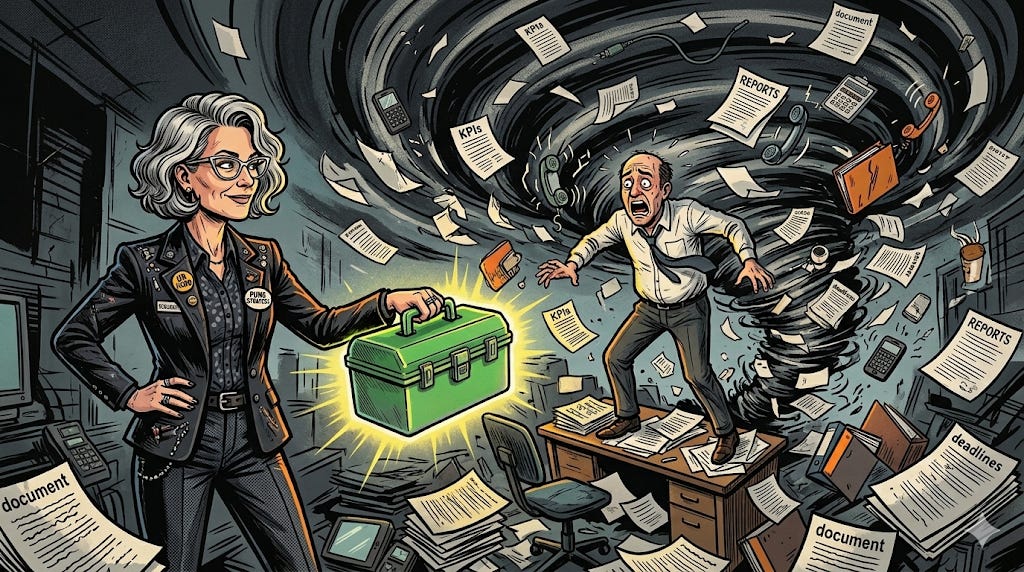
In Part 3, we laid out the Strategic Realism playbook for curing the corporate FUBAR. We talked about dismantling Single Points of Failure (SPOFs), democratizing context, and building systems that assume human exhaustion.
It’s a great playbook. But let’s be brutally honest for a second: what if you don’t own the playbook?
What if you are the IT Manager or the Operations Supervisor from our scenario? You read the playbook, you agree with the playbook, but on Monday morning, your VP is still hoarding system access, the C-suite is still exhausted, and you are still the one expected to sprint through the dark with a 150-page stack of unverified papers. You don’t have the authority to rebuild the entire corporate machine.
So, what do you do? Do you just surrender to the CYA culture and hope the inevitable implosion doesn’t take you down with it?
Absolutely not. Strategic Realism isn’t just for the C-suite. It’s a survival mechanism for the middle. When you cannot control the macro-environment, you must ruthlessly control your micro-environment.
Here is how middle management and frontline leaders can survive the corporate FUBAR without defaulting to weaponized compliance.
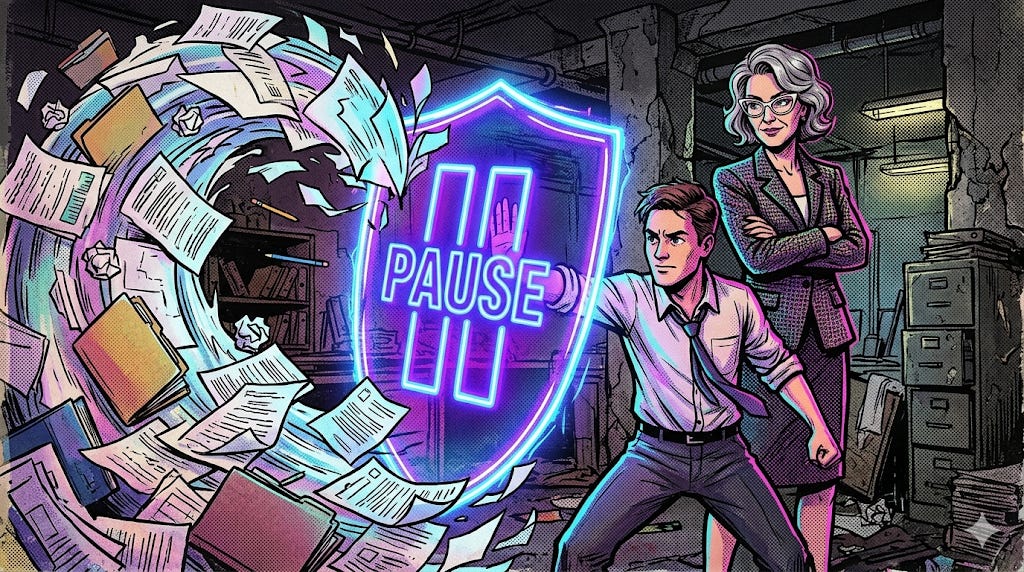
Survival Tactic 1: Micro-Level “Stop Work Authority”
You might not be able to change the company policy, but you can change how you accept a hand-off. The FUBAR in our scenario happened because a Manager handed a Supervisor a massive stack of papers with a vague directive: “…get the signatures.”
If you are on the receiving end of a blind directive, you have to hit the brakes.
The Tactic: Practice the “Clarification Pause.” When handed a task in a vacuum, do not immediately execute. Respond with: “I am ready to get this signed, but I need the context to confirm I’m protecting the company. Which specific pages require signature, and what are the critical fail points I need to verify before I put this in front of the Executive?”
Why it Works: It frames your pushback as risk mitigation. You aren’t refusing to do the work; you are refusing to do the work blindly. You are forcing the person above you to acknowledge the void.
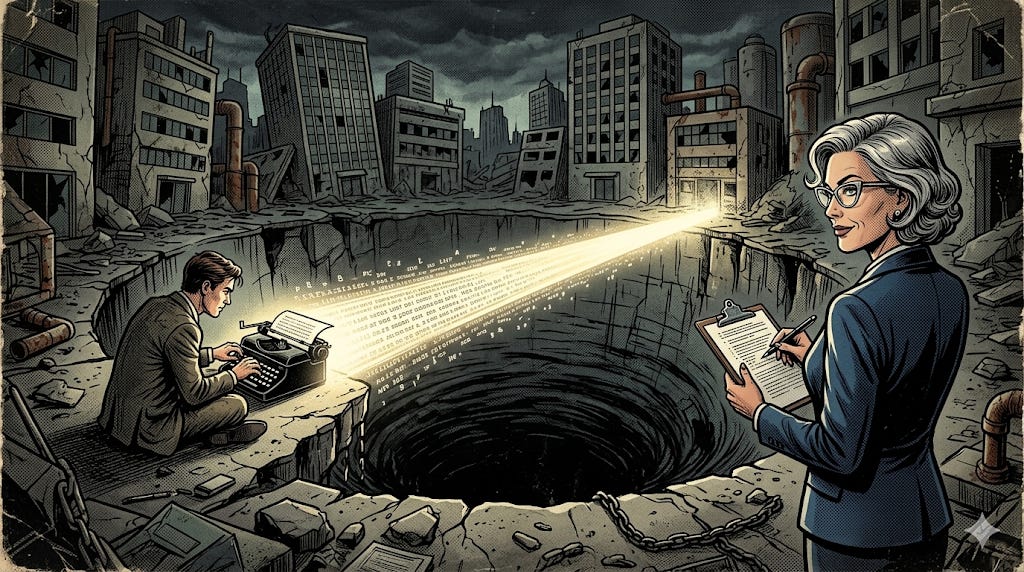
Survival Tactic 2: Constructive CYA (Documenting the Void)
Traditional CYA is defensive and toxic (e.g., “I was handed a stack of paper, so that’s what I’m doing. Not my fault.”). It’s about dodging blame. Strategic Realism requires “Constructive CYA” — documenting the systemic failure to force a structural conversation.
The Tactic: Shift from verbal panic to written audits. When you are forced into an analog workaround because a gatekeeper is off the grid, document the friction. Send a recap email: “To confirm, because [VP] is unavailable and holds sole access to the portal, we are executing a manual workaround. I have printed the 150 pages as requested, but without portal access, I cannot verify if the flagship liability waiver is included in this version.”
Why it Works: You are no longer just a cog absorbing the stress; you are generating objective data. You are creating a paper trail that documents the SPOF liability, making it much harder for upper management to ignore the broken system and return to the status quo once the dust settles.

Survival Tactic 3: Be the Umbrella (Build a Micro-Culture of Context)
If your organization is highly siloed and information is hoarded above you, do not pass that dysfunction down to your direct reports.
The Tactic: Democratize the context within your own sphere of influence. If you manage a team of two, train both of them to handle everything you do. Explain why a process exists, not just how to execute it.
Why it Works: You are building a pocket of resilience. When the storm hits, your team won’t panic because they understand the mechanics of the process. You are proving, on a micro-level, that transparent, cross-trained teams outperform siloed, secretive ones.
The Bottom Line: Control What You Can Control
You cannot train the power-hoarding tendencies out of your VP. You cannot magically restore the cognitive bandwidth of your exhausted Executive.
But you can control your boundaries. You can hit the pause button on blind directives. You can document the friction to force the issue. And you can commit to keeping your own team out of the dark.
If you are stuck in the middle of a broken machine, don’t just brace for impact. Start building your own bumpers.
Are you a manager caught in the middle of a siloed organization? How do you push back on vague directives without putting a target on your back? Drop your survival tactics in the comments.
