


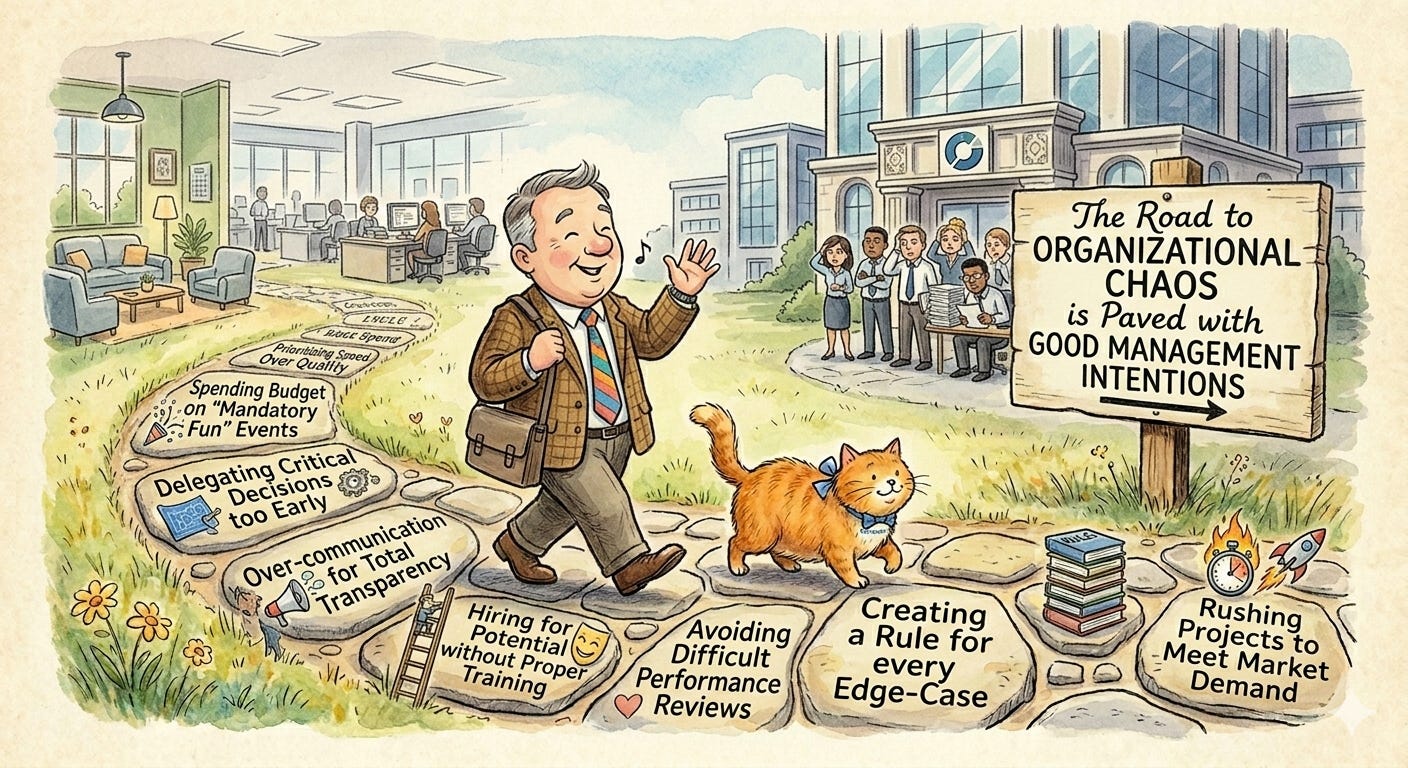
We have all worked for the “Nice Manager.”
They are the ones who say, “Don’t worry about logging that extra hour, just take off early on Friday.” They are the ones who avoid giving tough feedback because they “don’t want to hurt feelings.” They are the ones who let the team slide on the rules because “we’re all adults here.”
We love the Nice Manager. They feel safe. They feel like a friend.
Strategic Realism: The Nice Manager is a liability.
In fact, the “Nice Manager” is often the reason companies end up in court. That “cool” decision to ignore the time-tracking policy? That’s a PAGA violation. That “kindness” of not documenting poor performance? That’s a wrongful termination lawsuit waiting to happen.
Being “nice” is easy. Being a leader is hard. And if you are confused about the difference, just look at parenting.

The “Cool Parent” Syndrome
If you have ever raised a teenager (or been one), you know the “Cool Parent.”
The Cool Parent wants to be their kid’s BFF. They let curfews slide. They look the other way on homework. They avoid conflict to keep the peace. In the short term, their house is the fun house.
But what happens when that kid hits the real world? They struggle. They don’t understand boundaries. They fall apart when they hear the word “No.”
Leadership is exactly the same.
When you manage your team like a “Cool Parent” — prioritizing their temporary happiness over clear boundaries — you aren’t doing them a favor. You are setting them up to fail. You are teaching them that deadlines are suggestions, that policies are optional, and that performance doesn’t actually matter.
The Ultimate “Nice” Failure: Job Title Inflation
There is no clearer example of this damage than the Title Trap.
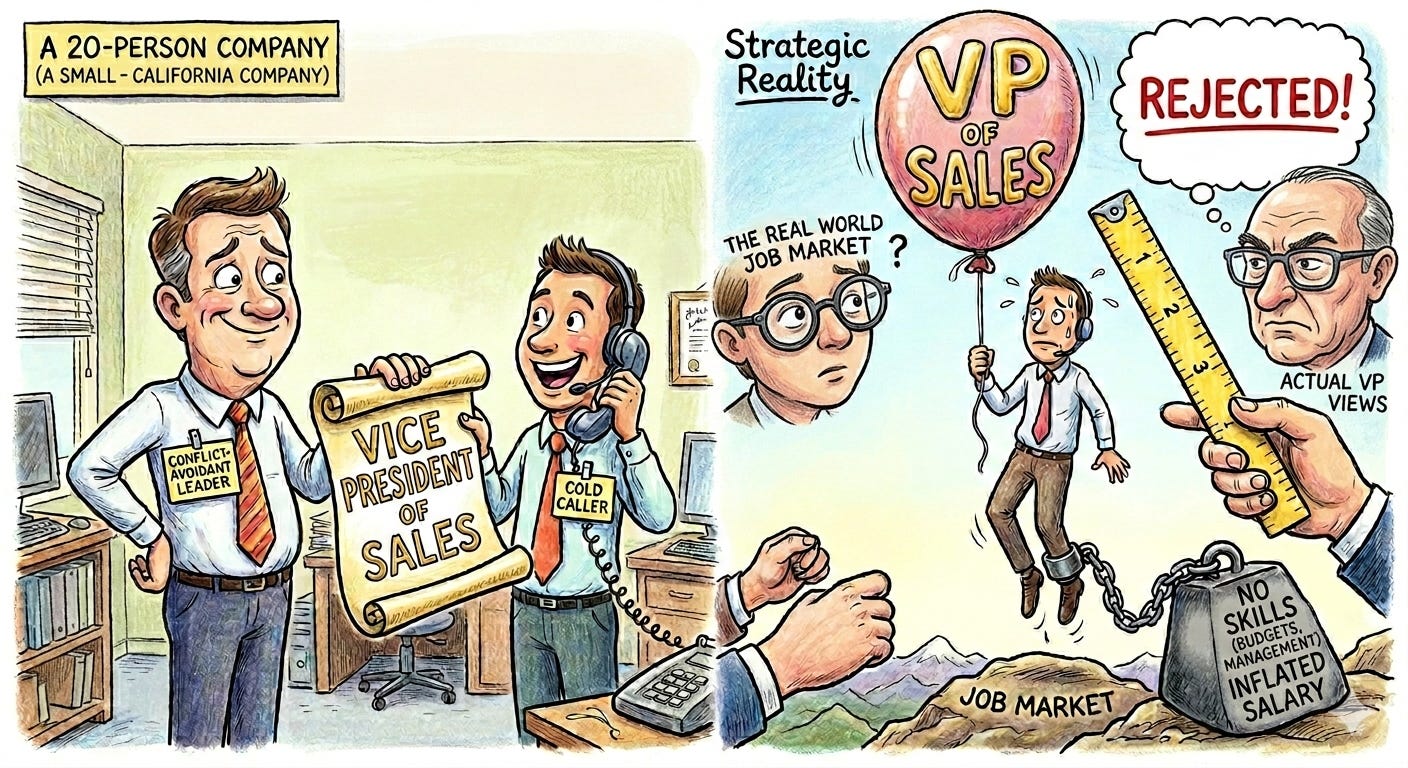
I see this constantly, from Mom & Pop shops to global companies. A conflict-avoidant leader has a solid employee — let’s say an outbound cold caller in a 20-person company. To keep them happy (and avoid a tough compensation talk), the leader promotes them to “Vice President of Sales.”
It feels like a win-win. The employee feels important, and the leader avoids a difficult conversation about career paths.
But here is the Strategic Reality: You just handcuffed that employee to your company and destroyed their future marketability.
If you pay that “VP” an inflated salary and give them a title that, in the real world, requires managing a $50M budget and a team of 50, you are setting them up for a massive fail. When they eventually leave your organization, they will enter the job market thinking their skills “go to 11.” But when they interview for actual VP roles, the market will see them as a “2.”
They won’t get the job. They won’t even get the interview. You gave them a title, but you didn’t give them the skills.
The “Social Promotion” Analogy
Think of it like a math teacher who passes a student who can’t multiply or divide, just to avoid an angry parent, upset student, disappointed school administration, and difficult conversations. The student gets the diploma. They’re not back in the teacher’s class again the next year, the administration can promote strong graduation numbers, and everyone feels good at graduation and moves on.
But when that student hits the workforce, the diploma is worthless because they lack the foundational skills to function. The “Nice Teacher” (and that administration) didn’t help that kid; they crippled their future to save themselves a headache in the present.
Leverage Your Innate Skills: “Clear is Kind”
You don’t need an MBA to fix this. You just need to tap into the skills you already use in your personal life.
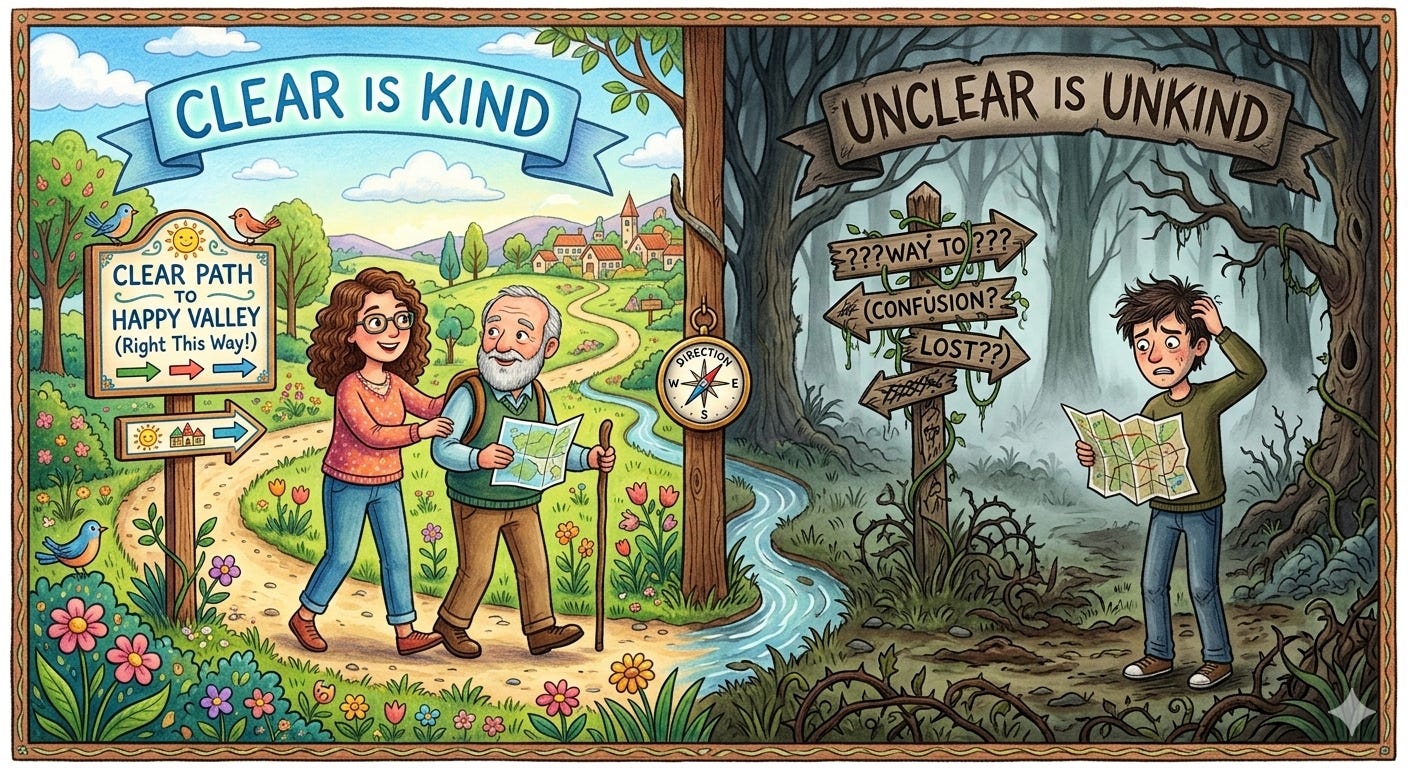
Brené Brown, the research professor and leadership expert, gave us the ultimate mantra for this: “Clear is Kind. Unclear is Unkind.”
How to Apply This to Your Team Today:
1. Stop “Hinting” at Feedback
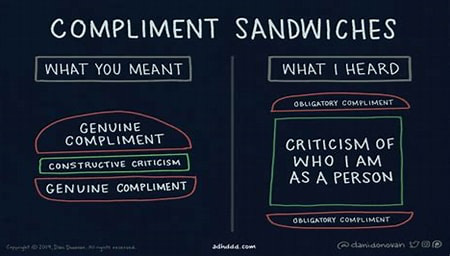
If an employee is missing the mark, don’t wrap the feedback in a “compliment sandwich” so thick they miss the point. That isn’t kindness; it’s cowardice. Be direct. “I value your work, but this report was late and full of errors. We need to fix this process for next time.”
2. Align Titles with Reality
Don’t give out “VP” titles like candy. Be honest about the role. Giving someone a title they haven’t earned isn’t a promotion; it’s a lie that will hurt them later. True kindness is building a development plan that helps them actually earn the skills to be a VP.
3. Boundaries Create Safety
Employees (like teens and really, all humans) actually crave structure. They want to know exactly what winning looks like. When you enforce the rules (like the time-tracking policies we discussed in our recent PAGA blog, you aren’t being a “cop.” You are building a safe, predictable environment where everyone knows how to succeed without getting the company sued or damaging morale.
The Realist Bottom Line
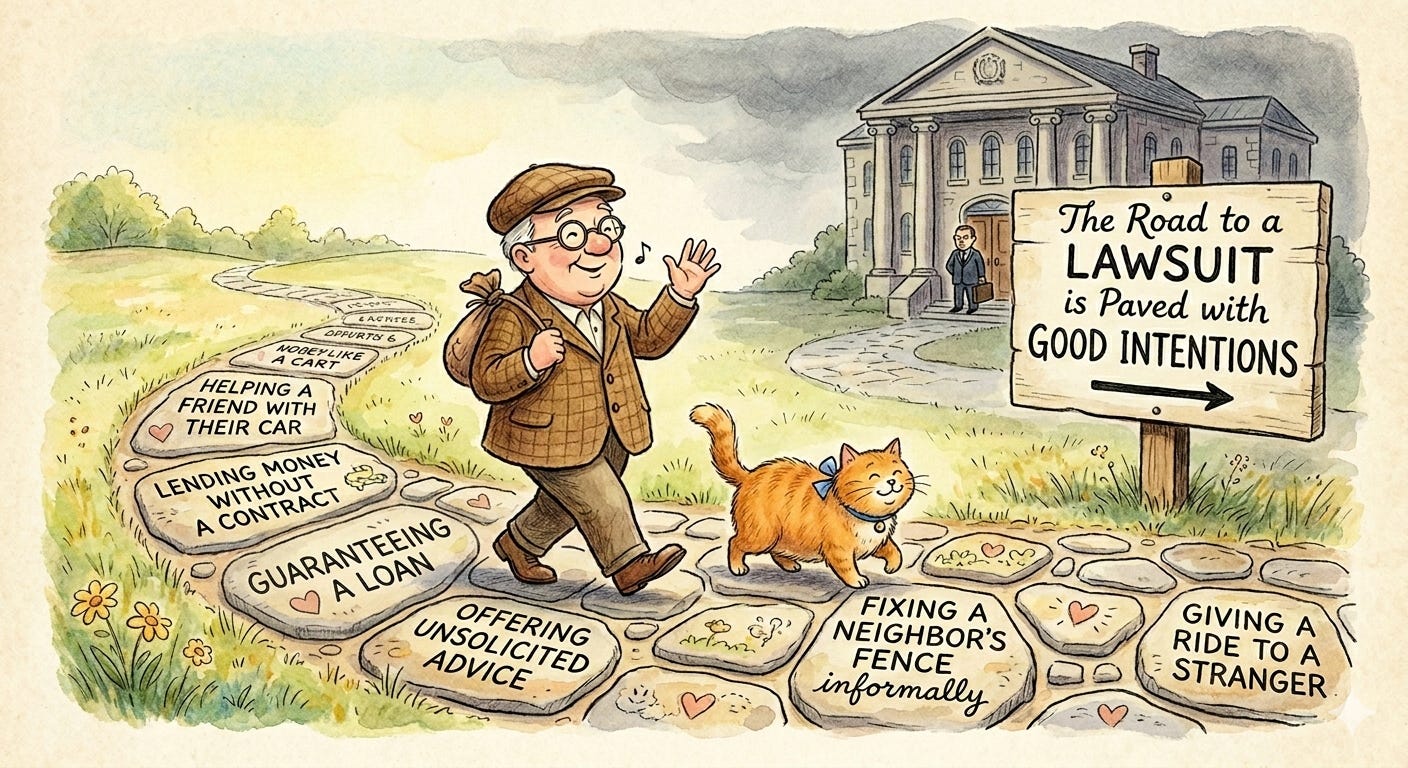
In life and in work, the road to a lawsuit is paved with good intentions.
The manager who “nicely” waves off a lunch break violation is building a class-action case. The leader who “kindly” inflates a title is building an unemployable employee.
Stop trying to be the “Nice Manager.” Start being the Kind Leader.
Be clear. Be consistent. Be the adult in the room.
Your team (and your legal department) will thank you.
Need a Reality Check?
Leading is lonely work, and sometimes “Nice” habits are hard to break. If you read this and realized you might have some “VP” titles that don’t match the job, or some “Cool Parent” habits that are hurting your results, let’s talk.
We specialize in Leadership Reality Checks: helping you audit your titles, clean up your feedback loops, and build a culture of accountability without losing your humanity. Whether you need a one-time strategy session or ongoing coaching to get your management team back on track, we are here to help. Message us today to set up a complimentary consultation.
Want Extra Credit?
For further insight and actionable tips on the “Clear is Kind” concept, check out this One Minute Management Tip video on YouTube. It’s a quick reinforcement of why avoiding clarity to “save feelings” is actually a leadership failure.
Have you seen this in your work life? Tell us more in the comments or join the chat!
