


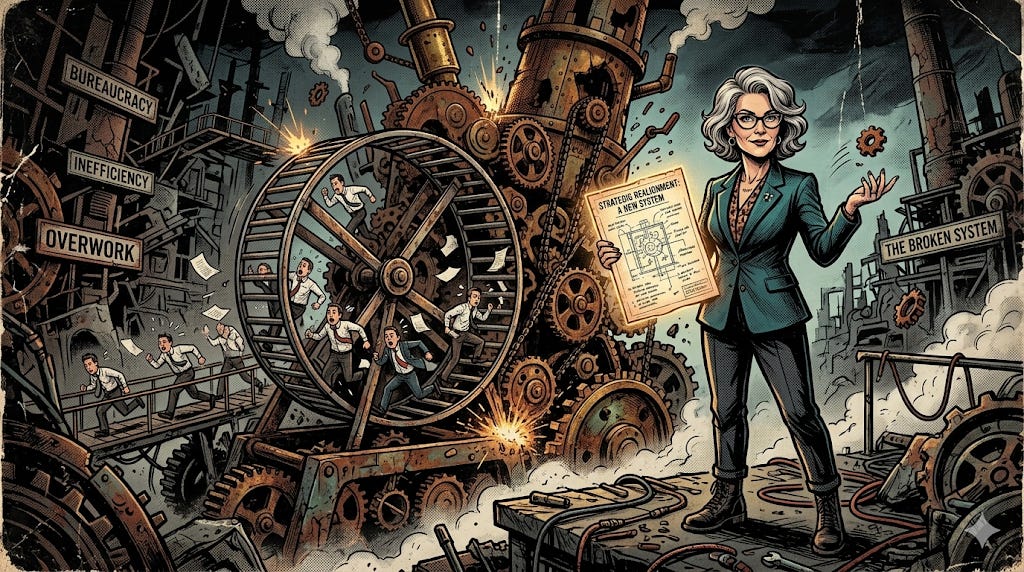
In Part 1, we examined the macro-level erosion of critical thinking. In Part 2, we watched it play out on the ground: a critical, multi-million-dollar contract fumbled through a chaotic, siloed organization, culminating in an exhausted Executive signing a fundamentally flawed stack of papers in the dark of a school auditorium.
The liability waiver was missing. The software was suspended. The company was exposed.
When the dust settles on a catastrophe like this, the corporate instinct is usually bloodlust. Fire the VP who was off the grid. Write up the Manager who panicked. Reprimand the Supervisor who didn’t verify the stack. But firing people doesn’t fix a broken machine. If you swap out the cogs but leave the process intact, you are simply resetting the timer until your next catastrophic failure.
This is where Strategic Realism comes in. Strategic Realism requires us to strip away the corporate fluff and confront the objective truth: humans will panic. Humans will hoard information. Humans will get exhausted. You cannot train the humanity out of your workforce, but you can build resilient, compliant systems that assume those vulnerabilities exist.
Here is the playbook for dismantling the power hoarders, curing the CYA culture, and building systems that actually assume exhaustion.
Playbook Move 1: Dismantle the Power Hoarders
Solving the VP Gatekeeper & the Manager
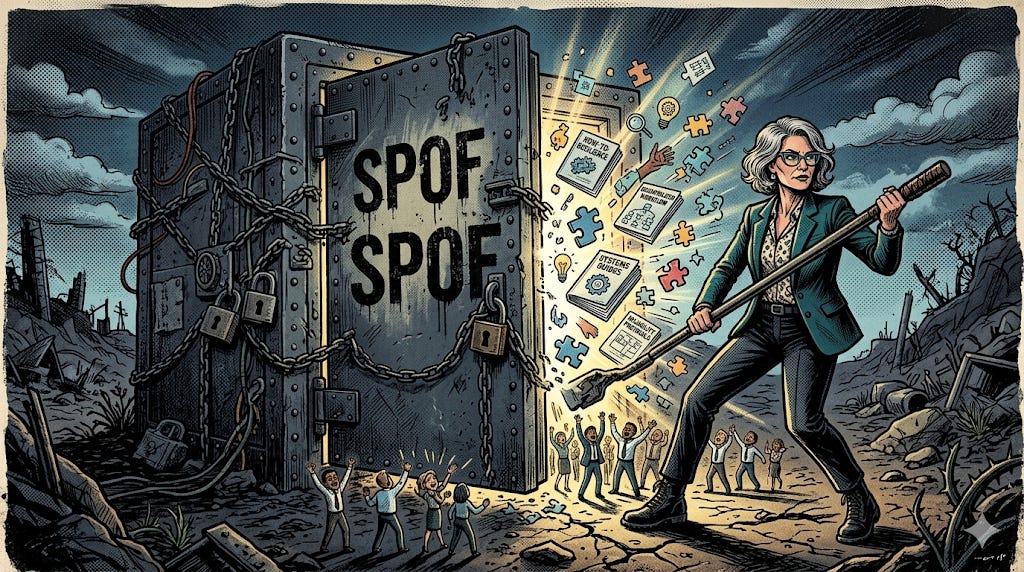
In our scenario, the VP of Operations & IT was the only person with super user admin access to the contract portal. When they went off the grid, the organization ground to a halt. The Manager, flying blind, panicked because they had zero visibility into what was actually required to execute the task.
In many organizations, information hoarding is disguised as “separation of duties” or treated as a twisted form of job security.
The Fix:
Hunt Down the SPOFs: You must actively audit your organization for Single Points of Failure (SPOFs). If a critical process stops dead because one specific person gets on an airplane or loses cell service, your process is a massive liability.
Democratize the Context: Stop accepting “so-and-so handles that” as a valid operational answer. Workflows, vendor requirements, and system accesses must be documented and cross-trained.
Redefine Leadership Metrics: A leader’s value should not be measured by how indispensable they are, but by how independently their team operates when they aren’t in the room.
Playbook Move 2: Cure the CYA Culture
Solving the Operations Supervisor
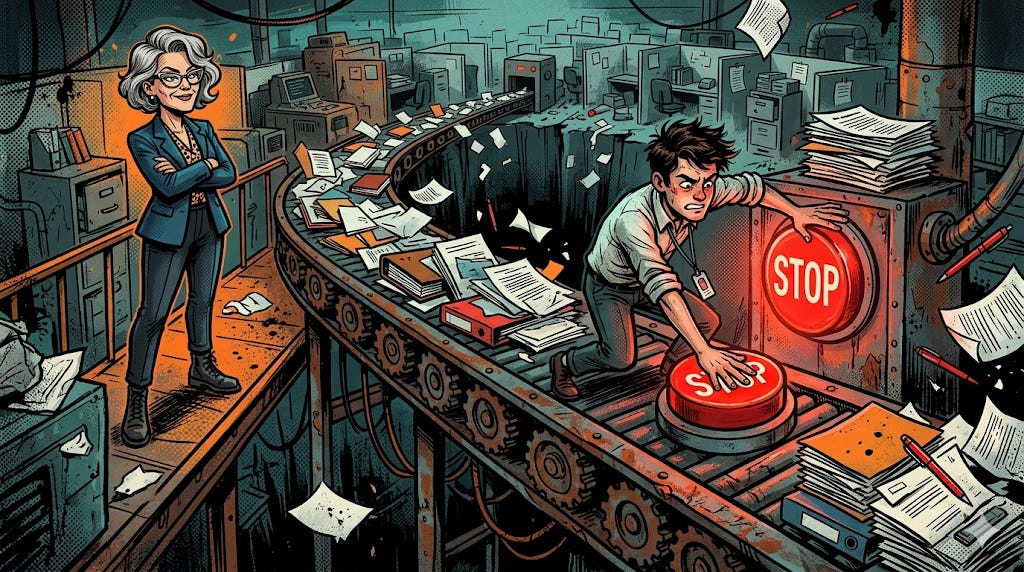
It is easy to blame the junior Supervisor for blindly pushing a 150-page stack of unverified papers up the chain. But remember the reality: they were handed a frantic, vague directive (”just get the signatures”) in a culture built on secrets. They assumed the person handing them the paper had already done the quality control.
When people operate in the dark, they default to compliance over critical thinking.
The Fix:
Implement “Stop Work Authority:” We use this in manufacturing and safety, but it needs to apply to administrative operations, too. Junior staff must be explicitly empowered — and expected — to hit the brakes and say, “I don’t know what I am looking at, and I am not moving this forward until I do.”
Kill the Vacuum: Leaders cannot issue half-baked directives and expect full-baked execution. Directives must come with context.
Shift the Culture of Accountability: Stop asking, “Who is going to take the blame if this goes wrong?” and start asking, “What is our mechanism to verify this is right?”
Playbook Move 3: Build Systems That Assume Exhaustion
Solving the Executive Sponsor
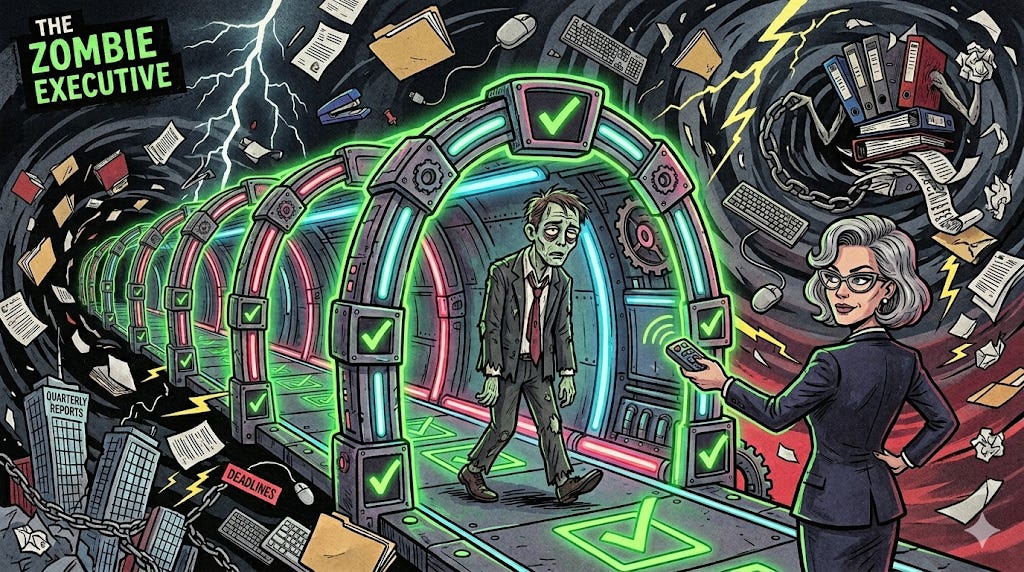
The final failure rested on the Executive, who signed a massive contract without reading it because they were suffering from profound decision fatigue and were ambushed in the dark. We want to believe our executives are an infallible last line of defense. The Strategic Realism approach acknowledges that on a Friday night, after a 60-hour week, they are just tired humans trying to go home.
The Fix:
Design for Reduced Capacity: Stop designing your workflows for humans operating at 100% capacity uninterrupted in a quiet room. Design your fail-safes for humans operating at 40% capacity on a Friday evening in the middle of a tornado.
Fatigue-Proof the Analog Workarounds: When digital systems fail, analog processes need digital-level bumpers. A 150-page physical stack of paper should never reach an executive without a standardized, mandatory cover sheet acting as a physical checklist. (e.g., Checkbox 1: Is the SLA attached? Checkbox 2: Is the flagship liability waiver attached and flagged with a red sticky note?)
Mandate Dual-Verification: High-risk analog workarounds must require two sets of eyes to verify the checklist before it is handed to the final signer.
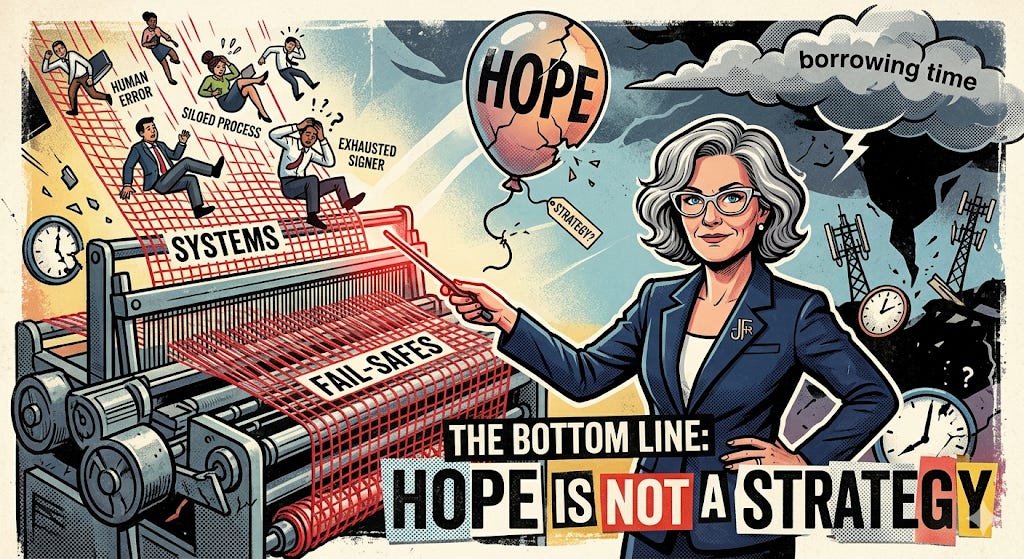
The Bottom Line: Hope is Not a Strategy
You cannot simply hope that your VP won’t lose cell service. You cannot hope that your junior staff will magically decipher a siloed process. And you cannot hope that an exhausted executive will catch a missing page in the dark.
High-performing organizations aren’t built on the assumption that everyone will always do the right thing; they are built on systems that support people when they inevitably do the wrong thing.
What are the critical SPOFs hiding in your organization right now? Are your people empowered to hit the brakes, or are they just executing blindly to cover themselves? Let’s talk about it in the comments.
If your organization is running on borrowed time, it’s time to rewrite the playbook. Reach out to JFarrHR to learn how to integrate Strategic Realism into your operations.
