


Think about the last time you heard a large group of people singing together — maybe a crowd at a stadium, or even just your extended family singing “Happy Birthday” at the kitchen table.
Most of the time, everyone is trying to sing the exact same note at the exact same time. That is unison. As more people join in, the sound gets louder, but it doesn’t get any richer or more interesting. It’s just one single note, amplified. If someone is slightly off, the whole thing can sound flat and messy.
Now think about your favorite band, or a professional choir. They aren’t all singing the same note. To get that massive, beautiful sound, someone has to sing the melody, someone else has to drop down to cover the bass line, and another person sings a third above them. They are deliberately singing different notes that stack on top of each other to create something complex and powerful. That is harmony.

In my two decades of HR business partnership, I see leaders constantly trying to build their teams in unison. They call it “culture fit.” But more often than not, “culture fit” is just a corporate euphemism for hiring people who look, think, and sound exactly like the executive team.
When your entire department plays in unison, you don’t get a masterpiece. You get an echo chamber. Here is how to stop hiring for unison and start conducting for harmony.
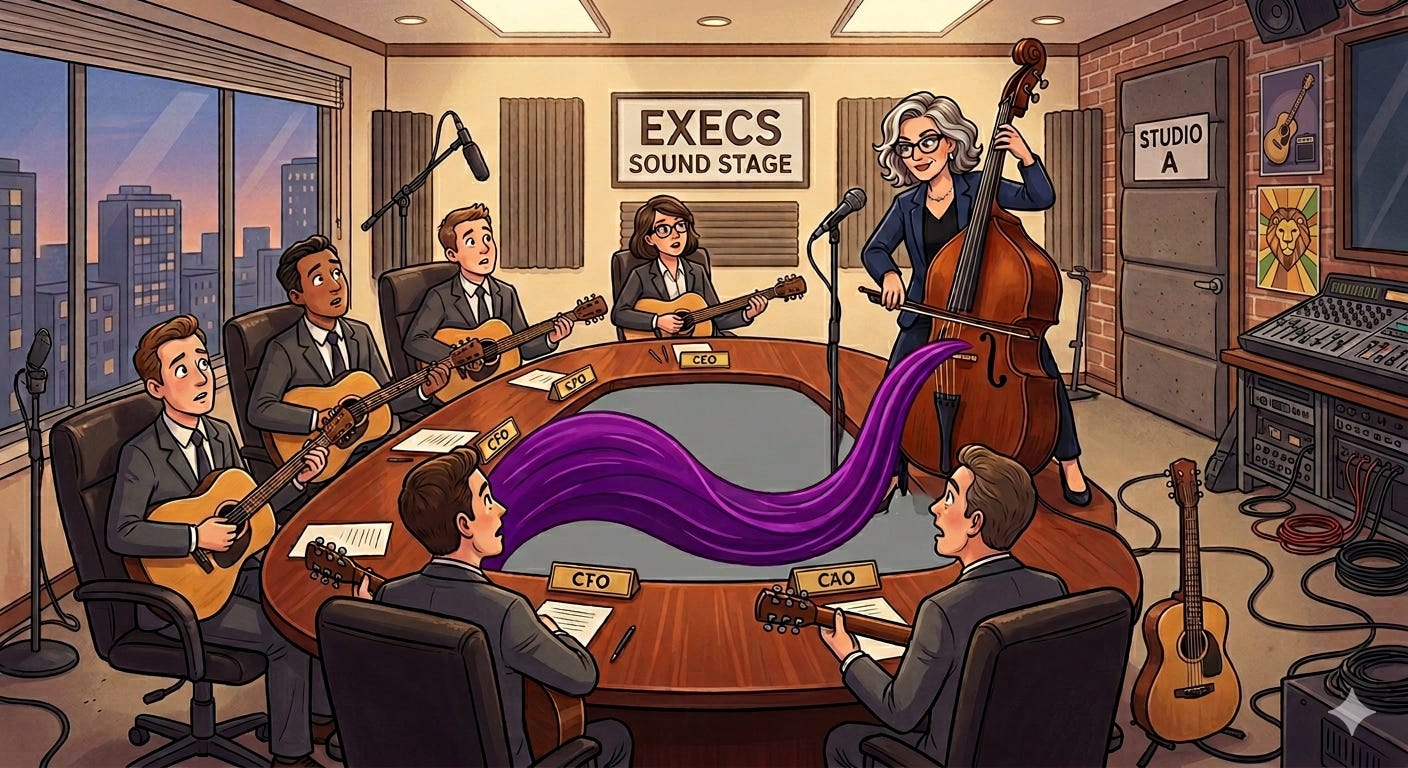
Ditch “Culture Fit” for “Culture Add”
When you hire for culture fit, you are explicitly looking for someone who won’t rock the boat. You are looking for someone who already knows the song and will sing the exact same melody as the rest of the room.
Strategic leaders hire for culture add. They look at their team, identify the frequencies that are missing, and hire someone to fill that sonic gap.
If your leadership team is full of high-level, visionary thinkers (the sopranos), hiring another visionary doesn’t help you. You need a grounded, operational pragmatist (the bass) to anchor the ideas to reality. It might feel less comfortable to manage someone who thinks differently than you, but that tension is what creates a full sound.
Take a listen to a track from JFarrHR’s Greatest Hits: We’ve talked about this before. From a legal standpoint, ‘culture fit’ is a dangerous game. It’s a subjective metric that invites unconscious bias and opens the door to discrimination claims. ‘Culture add,’ on the other hand, forces you to objectively define the missing skills and perspectives your team actually needs.
So, how do you actually hire for a Culture Add? You have to kill the “airport test” — the age-old subjective metric of: Would I want to be stuck at an airport or grab a beer with this person?
Instead, implement structured interviewing. You objectively define the missing “instrument” on your team and build your interview questions to test specifically for that. If your loud, creative marketing team lacks analytical rigor, you design the interview to find the data-obsessed introvert. They might not match the energetic “vibe” of the room, but you aren’t hiring them for the vibe. You are hiring them to fill a sonic gap.
Establish the Key Signature (Core Values)
Telling your team to play different notes doesn’t mean you let them play in completely different keys. If your sales team is playing in G Major and your operations team is playing in E-flat Minor, you don’t have harmony; you have a cacophony.
This is where your core values come in. Your organization’s mission and non-negotiable standards are your Key Signature.
But here is a dose of Strategic Realism: words like “integrity” or “respect” are not a key signature. They are fluffy corporate buzzwords that mean something different to everyone. If you want a true key signature, you have to define your values as observable behaviors.
Instead of “integrity,” your standard is: We don’t hide bad news from the client. Instead of “respect,” your standard is: We debate the idea, not the person. When your key signature is defined by concrete behaviors, everyone has the freedom to improvise their distinct parts — and it becomes instantly obvious when someone is playing out of tune.

The Leader as the Audio Engineer
In a great mix, the instruments don’t just blast at maximum volume the whole time. A good audio engineer knows when to pull the rhythm guitar back so the vocals can shine, and when to boost the drums to drive the chorus home.
As a leader, you are the engineer at the mixing board. If you have a dominant, outspoken team member who is drowning out the introverts, it is your job to pull their fader down a bit and boost the mic of the quiet analyst who has the data you need. Harmony requires balance. You have to actively manage the levels in the room to ensure every critical voice is heard in the final mix.
But what happens when your lead guitarist refuses to turn down their amp? We all know the ‘brilliant jerk’ — the top-performing salesperson or brilliant developer whose amp volume is always turned up to 11, constantly talking over everyone and destroying the team’s culture.
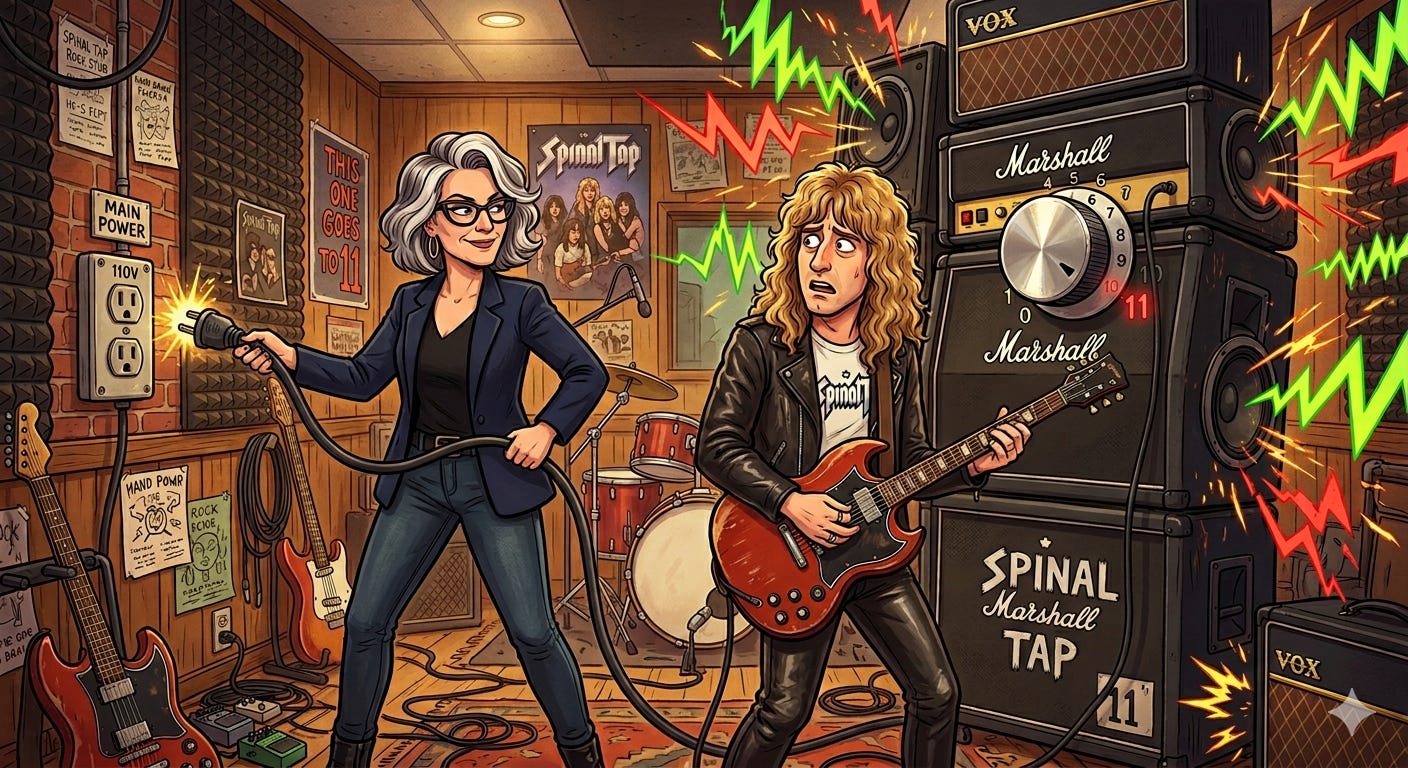
As the engineer, you have to make the hard call. If someone refuses to play well with the rest of the band, you have to unplug their amp and escort them out of the studio, no matter how good their solo is. Tolerating a toxic high-performer tells the rest of your team that the harmony doesn’t actually matter.
And just like an engineer relies on studio monitors to hear the true mix, a leader relies on continuous feedback loops. You can’t balance the room if you only ‘listen’ to your team during their annual performance review. You have to be actively listening to the live track.
The Sweet Sound of Strategic Realism
It’s human nature to want to be surrounded by people who agree with us. It feels safe. It feels easy. But easy doesn’t drive innovation, and hope is not a strategy.
Building a high-performing team means getting comfortable with a little musical tension. Stop trying to assemble a choir of clones singing in unison. Find the odd notes, blend them together, and let the harmony do the heavy lifting.
The Track of the Week
🎵 “The Chain” by Fleetwood Mac 🎵
Want to talk about distinct, different voices creating an absolute masterpiece? Look no further. This band was famously full of wildly different personalities (and a massive amount of internal tension). Yet, listen to how the vocals stack on the chorus, or how that iconic bassline operates completely independently of the guitar but drives the entire back half of the song. They weren’t trying to sound like each other; they were trying to serve the song.
Over to you
Look at your immediate team right now. Are you all singing in unison, or do you have true harmony? Let me know in the comments which “instrument” your team is currently missing.
